Does Your PLC Lose Its Program During a Power Outage?
A common concern in industrial automation is whether a PLC retains its logic after losing power. This answer directly impacts system reliability and production downtime. In industries like petrochemicals and pharmaceuticals, program retention is critical. Unexpected data loss can lead to costly restarts or unsafe conditions. Well-designed control systems must protect logic and parameters during outages. At Oiltech Controls, we emphasize choosing hardware that ensures faster recovery and minimal disruption.
Understanding Volatile vs. Non-Volatile Memory
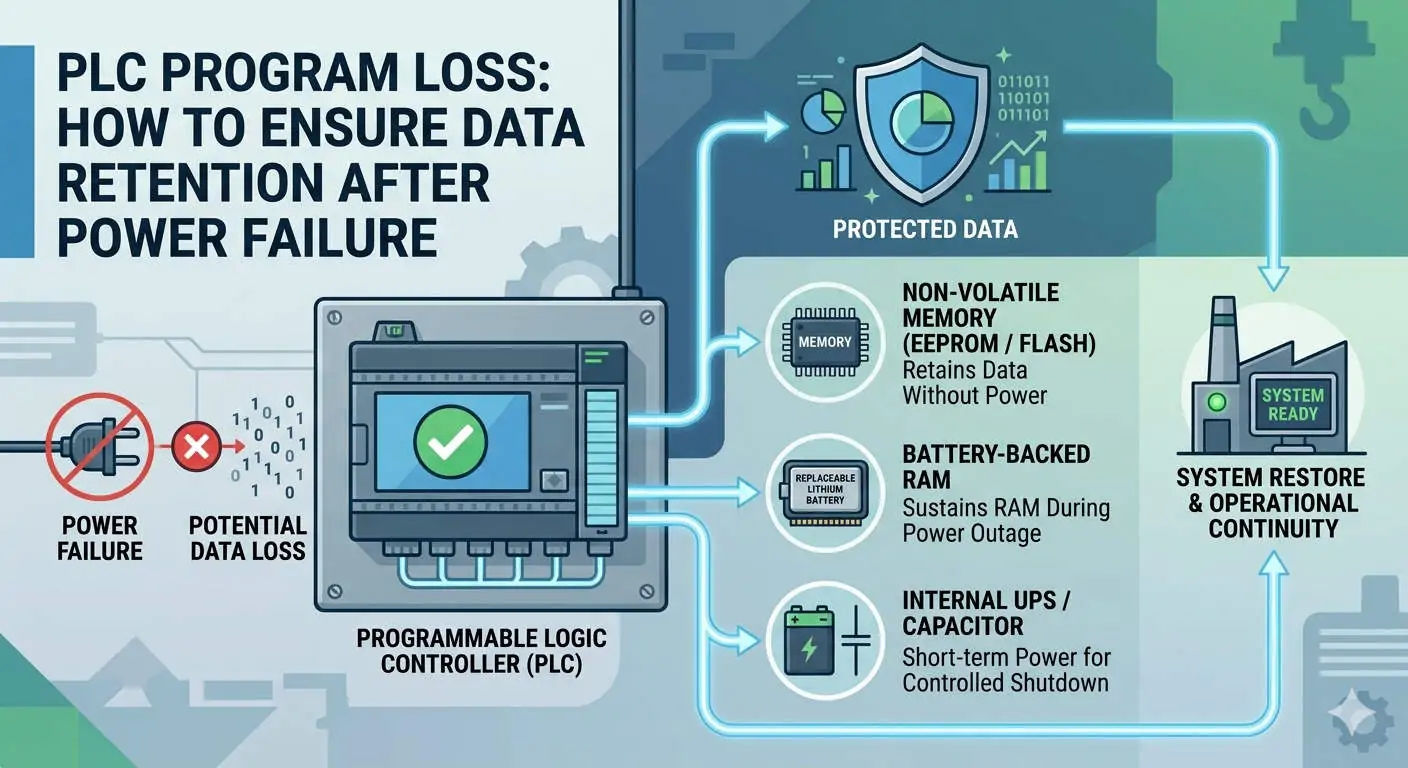
The most critical factor is the internal memory type used by the PLC. Volatile RAM requires a constant battery backup to hold data. Without it, the program disappears when you remove the power. Modern high-end systems use non-volatile Flash or EEPROM memory. These chips retain configuration data without any electrical current. However, if a battery-backed system fails, the PLC may boot up empty. This requires a manual download and causes hours of preventable downtime.
The Risks of Battery Backup Dependency
Many legacy PLCs use lithium batteries to preserve RAM contents. These batteries typically last between two and five years. Most industrial systems provide low-battery alarms via hardware diagnostics. In field experience, unnoticed battery failure causes more data loss than power outages themselves. If both the main power and the battery fail, all volatile data vanishes. Therefore, relying solely on batteries creates a single point of failure for your control logic.
Managing Retentive Data and Process Continuity
Modern PLCs allow engineers to select specific retentive data registers. These registers store critical values like recipes, counters, and PID tuning parameters. Temporary variables, however, reset to zero after a power cycle. Improper configuration causes inconsistent restart behavior and requires manual recalibration. Ensuring correct retentive settings is vital for continuous manufacturing. It guarantees that the process resumes exactly where it stopped before the blackout.
Maintenance Strategies for Power Resilience
- Proactive Battery Care: Replace PLC batteries every two to three years during planned shutdowns.
- Stay Powered: Never replace a battery while the PLC is off to avoid immediate memory loss.
- Power Protection: Install a UPS for critical racks to bridge short-term power fluctuations.
- Surge Suppression: Use surge protection devices to block voltage spikes in outdoor installations.
- Version Control: Maintain dated offline backups on a dedicated engineering station for quick recovery.
Expert Insights from Oiltech Controls
Power loss rarely causes hardware damage, but poor maintenance leads to data loss. We often see refineries lose hours because they neglected a five-dollar battery. Designing for resilience requires a robust hardware selection and a disciplined maintenance strategy. If you need hardware that survives the toughest outages, explore the solutions at Oiltech Controls Limited for industry-leading reliability. We provide the components that keep your automation systems secure.
Application Scenarios for Data Persistence
- Batch Processing: Retentive registers ensure a chemical batch continues accurately after a power dip.
- Remote Stations: Non-volatile memory is essential for solar-powered sites with intermittent power.
- Safety Systems: Critical interlocks must stay in memory to prevent hazardous conditions during restarts.
Frequently Asked Questions (FAQ)
1. Will every PLC keep its program after an outage?
No. Entry-level units might lose programs without a battery, while mid-to-high-end PLCs use non-volatile memory.
2. How can I tell if my PLC battery is dying?
Check the hardware LEDs for a “BATT” error or monitor the system diagnostic bits in your HMI.
3. Is an SD card enough for a program backup?
An SD card provides a good local backup, but you should still keep a secondary copy on your server.