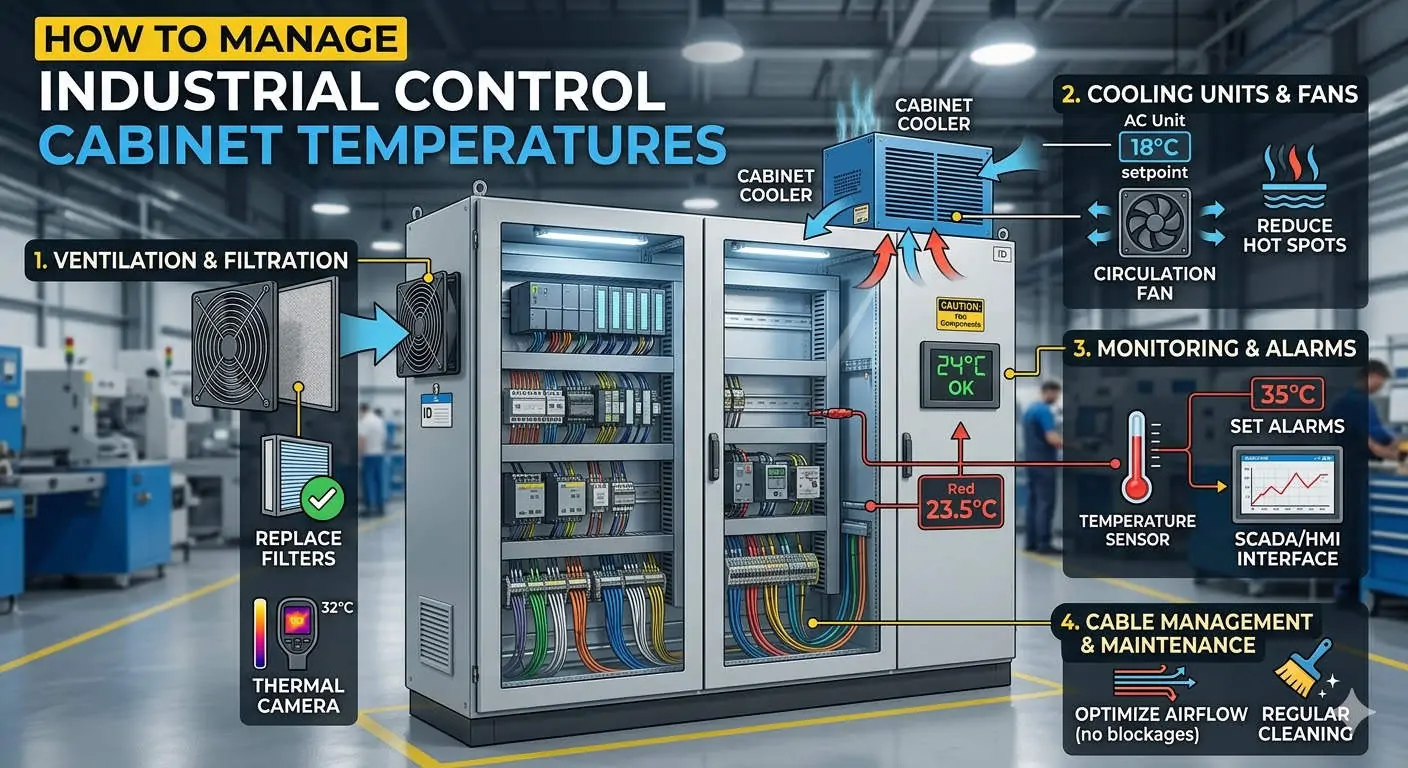
Managing PLC Heat Dissipation: Protecting Your Industrial Control Systems
Poor heat dissipation in electrical cabinets is a silent killer for PLCs. According to the Arrhenius aging law, every 10°C temperature increase reduces component lifespan by 30% to 50%. In high-load sectors like oil and gas, stable temperature control is vital. It directly impacts system reliability and prevents expensive unplanned downtime. At Oiltech Controls, we believe effective thermal management is an investment in long-term plant safety.
The Real Impact of Operating Temperature Ranges
Most industrial PLC modules have a nominal operating range of 0°C to 60°C. However, running near the upper limit accelerates the aging of CPU and power modules. Internal cabinet temperatures often exceed the external environment by 10°C to 20°C. This thermal stress causes random faults like packet loss or system reboots. Consequently, many “intermittent errors” result from heat rather than software bugs.
Calculating Heat Dissipation Capacity for DCS Stability
PLC modules themselves consume little power, but heat concentrates in power and communication units. Local hot spots can exceed the average cabinet temperature by up to 15°C. Furthermore, heat from nearby variable frequency drives (VFDs) creates a cumulative thermal effect. Engineers must calculate the total heat load to select the right cooling method. We recommend maintaining a cooling margin of at least 20% to avoid full-load operation.
Balancing IP Ratings with Effective Ventilation Structures
Engineers often prioritize high IP ratings like IP65 to block dust. However, sealed cabinets create a dangerous “heat accumulation effect” without active cooling. A clogged filter can reduce air cooling efficiency by over 40% in field conditions. Therefore, a cabinet with great dust protection may still fail due to high internal temperatures. Proper ventilation design must balance environmental protection with airflow requirements.
Field Guide for Heat Source Layout and Airflow
- Strategic Placement: Install PLCs at the upper-middle section to avoid rising heat from VFDs.
- Module Spacing: Leave at least 50mm of clearance between power modules and CPU units.
- Natural Convection: Place air inlets at the bottom and outlets at the top for better flow.
- Airflow Paths: Use air baffles to guide cool air directly across high-heat components.
- Prevent Shorts: Ensure cool air does not bypass equipment and flow directly to the outlet.
Essential Maintenance for Cooling Systems
Regular maintenance ensures your cooling design continues to perform as expected. You should inspect filters every one to three months depending on the dust levels. Cooling fans typically last three to five years and require proactive replacement. Additionally, check for reversed fans or reduced air volume during routine inspections. At Oiltech Controls, we emphasize that design excellence fails without consistent field maintenance.
Expert Recommendations from Oiltech Controls
Temperature management determines when your PLC fails, not if it will fail. We often see local temperatures reach 68°C when power modules sit too close to heat sources. If your system has run for five years without a thermal audit, now is the time. For reliable cooling solutions and genuine ABB or Honeywell spares, visit the specialists at Oiltech Controls Limited to secure your system’s future.
Frequently Asked Questions (FAQ)
1. How do I know if my PLC is suffering from heat issues?
Check for module surface temperatures above 55°C. High failure rates during summer months also indicate thermal stress. If opening the cabinet door restores normal operation, you likely have a dissipation problem.
2. Do I always need a cabinet air conditioner?
Not always. Use air conditioners if the ambient temperature exceeds 35°C. They are also necessary for high-power equipment or pharmaceutical production. Standard air cooling works for lower-power systems in temperature-controlled rooms.
3. Can I monitor cabinet temperatures remotely?
Yes. We recommend integrating temperature sensors into your DCS for real-time monitoring. This allows operators to receive alerts before hardware reaches critical failure points.