Free Pallet Automation Systems Revolutionize Industrial Manufacturing
Manufacturers face increasing pressure to scale production rapidly. Free pallet automation provides flexible solutions for this challenge. According to MarketsandMarkets, the factory automation market will reach $306.2 billion by 2027. This growth reflects industry’s need for adaptable production systems.
The Scalability Challenge in Modern Manufacturing
Automotive suppliers often win contracts with uncertain volumes. Initial orders may be small testing quantities. However, production must scale quickly for larger follow-up orders. Traditional automation requires massive upfront investment. Free pallet systems offer more flexible alternatives. Therefore, manufacturers can adapt to changing demands efficiently.
Understanding Free Pallet Automation Technology
Free pallet systems move workpieces independently between stations. Pallets travel on conveyor or track systems. They can stop, reroute, or buffer as needed. Each station performs specific tasks like welding or assembly. This asynchronous movement prevents bottlenecks. Moreover, it enables mixed-model production on one line.
Key Benefits for Industrial Automation
Free pallet systems provide significant advantages. They allow easy addition or removal of workstations. Production lines adapt to changing requirements quickly. Different products can follow different paths through the system. If one station stops, others continue operating. This ensures higher overall equipment effectiveness.
Advanced Linear Transfer Systems
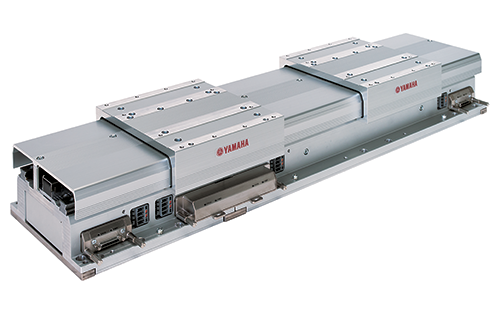
Yamaha’s LCMR200 linear transfer system enhances free pallet technology. Linear motors power sliders up to 2500mm per second. The system handles payloads up to 30 kilograms. Precision positioning enables accurate robotic operations. Furthermore, the system operates quietly at full speed.

Figure 1: Free pallets automation system for industrial manufacturing
Modular Manufacturing Cell Innovation
Yamaha partners with systems integrator El.Mec from Italy. They developed modular manufacturing cells using SCARA robots. Standardized interfaces connect cells easily. This enables rapid production line expansion. Manufacturers can bid confidently on large contracts. They know they can scale capacity as needed.
Precision Control and Traceability
Encoder feedback provides continuous position data. This information optimizes throughput and prevents collisions. The system also enables per-unit traceability. Automotive industry requirements are met automatically. No additional RFID systems are necessary. Consequently, costs and engineering efforts reduce significantly.

Figure 2: Yamaha linear transfer system for free pallets automation
Industrial Automation Expert Perspective
World of PLC specialists recognize free pallet systems’ importance. These systems integrate well with modern PLC and DCS control systems. They represent the future of flexible manufacturing. The technology supports Industry 4.0 implementation perfectly. Real-time data collection enables continuous improvement.
Explore industrial automation solutions at World of PLC. Our expertise helps implement these advanced systems effectively.
Practical Implementation Scenarios
Automotive Components: EV battery assembly lines use free pallet systems for module production. Pallets move batteries through inspection, screwdriving, and welding stations.
Electronics Manufacturing: Mixed-product assembly lines benefit from flexible routing. Different products take different paths through the same system.
Consumer Goods: Seasonal production variations are managed efficiently. Production lines adapt quickly to changing product mixes.
Technical Advantages Summary
- Rapid production scaling capabilities
- Mixed-model manufacturing support
- Minimal bottleneck operations
- Easy maintenance and adaptation
- Integrated traceability systems
- High precision positioning
Frequently Asked Questions
What industries benefit most from free pallet automation?
Automotive, electronics, consumer goods, and medical device manufacturing see significant benefits from this technology.
How does free pallet automation differ from traditional conveyors?
Free pallets move independently, allowing asynchronous operation and flexible routing between stations.
What control systems work with free pallet automation?
Modern PLC and DCS systems integrate seamlessly with free pallet automation for complete factory automation solutions.