


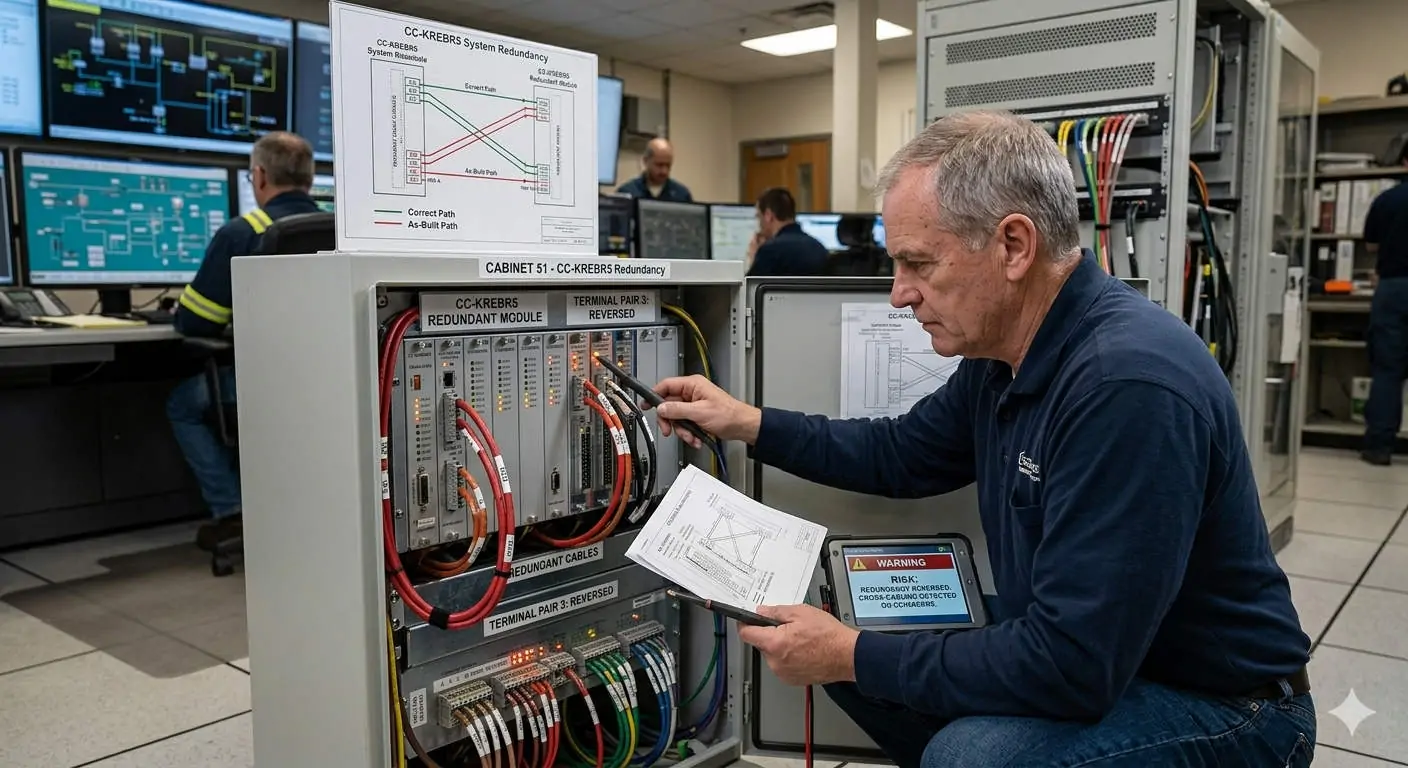
Does Reversing the Honeywell CC-KREBR5 Redundancy Cable Damage DCS Modules?
The Honeywell CC-KREBR5 redundant cable assembly ensures high-availability communication between critical DCS modules. It eliminates single points of failure in complex control systems. Industries like petrochemicals and power generation rely on this integrity. Downtime in these sectors directly leads to safety risks and production loss. Therefore, proper redundancy wiring remains essential for long-term system stability. At Oiltech Controls, we prioritize these technical details to safeguard your plant operations.
The Core Function of Redundancy Communication Integrity
The CC-KREBR5 cable carries synchronized data between primary and secondary controllers. It is not a simple passive connection. If you reverse this cable, the modules may fail to synchronize. Consequently, the system might enter a “single-controller” mode without clear alarms. This makes failover performance unpredictable during a real emergency. As a result, your system availability drops significantly despite having redundant hardware installed.
Keyed Connector Design and Signal Mapping Risks
Honeywell designs these connectors with keys to prevent incorrect insertion. However, tight cabinets and poor visibility can lead to forced misalignment. Reversing the cable misroutes essential TX/RX and health-check signals. While it rarely “burns” the module immediately, it creates logic-level miscommunication. Over time, this misrouting may stress the communication drivers. This stress eventually leads to intermittent faults that are difficult to diagnose.
Electrical Protection and Long-Term Component Degradation
Honeywell DCS modules include ESD and limited overcurrent protection on their ports. However, they cannot tolerate persistent miswiring indefinitely. Short-term mistakes usually cause system alarms or link failures. In the long term, port degradation may occur. At Oiltech Controls, we have seen modules fail months after a wiring error. Therefore, correcting these issues promptly is vital for maintaining equipment lifespan.
Essential Installation and Maintenance Procedures
- Orientation Check: Always match connector labels such as A-to-A or B-to-B before power-up.
- Visual Alignment: Perform a physical pin check before energizing the cabinet.
- Cable Routing: Use proper paths to maintain the minimum bending radius.
- Avoid Force: Never bypass the connector keying through forced insertion in dense cabinets.
- Status Verification: Always check redundancy health via Experion Station after any wiring change.
Expert Insights from Oiltech Controls
From 15 years of site experience, miswiring rarely causes dramatic smoke or fire. Instead, it creates a “Link Degraded” state that often goes unnoticed. This silent failure is more dangerous than a burned module. In high-risk industries, a redundancy system that fails to switch over is a liability. For genuine Honeywell cables and expert technical guidance, visit Oiltech Controls Limited to ensure your DCS remains truly redundant.
Solutions for Redundancy Recovery
- Post-Error Testing: Perform a full manual redundancy switchover test after correcting the cable.
- Diagnostic Review: Use engineering tools to confirm “Primary/Secondary Healthy” status.
- Proactive Replacement: Consider replacing modules if intermittent communication errors persist after a reversal event.
Frequently Asked Questions (FAQ)
1. Will a reversed CC-KREBR5 cable instantly blow a fuse?
No, the module usually detects a signal mismatch and prevents the link from initializing.
2. Can I use the CC-KREBR5 with older Honeywell platforms?
It is designed for the Experion PKS series. Always check the Honeywell hardware compatibility matrix first.
3. What is the most common sign of a reversed redundancy cable?
The most common sign is a “Redundancy Lost” alarm or a failure of the backup controller to synchronize.


