



Mastering the Bently Nevada 3500/22M-01-01-00: The Pulse of Machinery Protection
Defining the Core Value of the Transient Data Interface
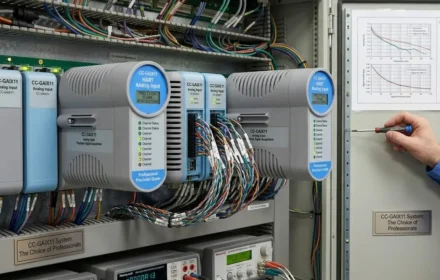
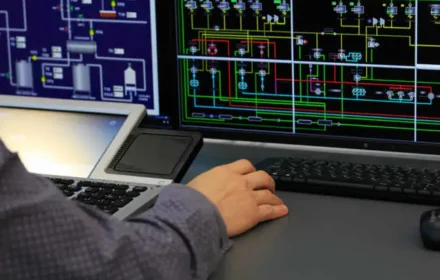
The Bently Nevada 3500/22M-01-01-00 serves as the primary gateway for the 3500 Machinery Protection System. This Transient Data Interface (TDI) module bridges critical vibration data with higher-level plant systems. In high-stakes sectors like power generation and petrochemicals, rotating equipment failure causes massive financial losses. Consequently, the 3500/22M ensures that high-resolution dynamic data reaches your DCS or SCADA platform for real-time diagnostics. Moreover, it provides the essential backbone for predictive maintenance strategies that prevent catastrophic machine breakdowns.

Strategic Model Code Breakdown: 3500/22M-01-01-00
Precision in procurement starts with understanding the specific part number suffixes. The 3500 series represents the industry-standard rack-based monitoring platform. The /22M designation identifies this as a modern “M” version TDI, which offers superior data buffering over legacy variants. The -01-01-00 suffix defines the Ethernet I/O configuration, standard industrial agency approvals (like CE and CSA), and default factory options. Therefore, even a minor deviation in these digits can lead to network incompatibility or regulatory non-compliance during installation.
Technical Insights into Data Throughput and Buffering
Modern industrial automation demands more than just steady-state values. The 3500/22M excels at capturing high-speed transient waveforms during critical machine events. As a result, engineers can generate complex orbit plots and FFT analysis for deep-root cause investigations. In the field, we have observed that older modules often lose data during rapid startup or shutdown sequences. However, the enhanced buffering capacity of the 22M ensures that every vibration peak is recorded, providing a complete digital picture of machine health.
Seamless Integration with Control Systems and Networks
The TDI acts as the brain of the rack for external communications, supporting protocols like Modbus TCP and Ethernet/IP. This native compatibility reduces the need for expensive protocol converters. In addition, centralized data handling improves overall system scalability. One critical risk note: if the TDI module fails, external communication stops entirely. While the protection functions of individual monitor cards remain active, operators may lose visibility, emphasizing the need for redundant network paths.
Installation Standards for Industrial Environments
To ensure long-term reliability, engineers must prioritize network stability and EMI protection. Industrial-grade managed switches are essential for isolating vibration data from standard office traffic. Furthermore, the 3500/22M must occupy Slot 1 of the rack to initialize correctly. Proper single-point grounding is also vital to prevent signal noise, especially when installed near variable frequency drives (VFDs). At Oiltech Controls Limited, we frequently find that “intermittent faults” are actually the result of poor cable shielding rather than hardware failure.
Expert Recommendations from Oiltech Controls Limited
The industry is rapidly moving toward digital transformation and remote monitoring. We believe that upgrading to the 3500/22M is a prerequisite for any plant seeking true “Smart Factory” status. While legacy /20 modules are robust, they often become bottlenecks in modern data-heavy environments. If you are planning a system overhaul, always perform a firmware audit to ensure compatibility between new TDI cards and older monitoring modules. We recommend maintaining at least one spare TDI module per facility to minimize downtime during communication outages.
For authentic components and expert engineering support, explore our extensive inventory at Oiltech Controls Limited to optimize your machinery protection strategy.
Technical Essentials for Field Engineers
- ✓ Slot Placement: Always install the TDI in Slot 1 of the 3500 rack.
- ✓ Network Isolation: Use a dedicated VLAN to prevent data packet collisions.
- ✓ Firmware Alignment: Sync your 3500 Rack Configuration Software with the module version.
- ✓ EMI Protection: Utilize shielded Cat6 cables in environments with high electrical noise.
Frequently Asked Questions (FAQ)
Q1: Can I hot-swap a legacy 3500/22 with a new 3500/22M?
Technically, yes, but it requires caution. While the hardware fits, the “M” series requires updated configuration software. Always back up your rack settings before attempting a swap to avoid losing threshold parameters.
Q2: Will the machine trip if the TDI module is removed?
No. The protection functions (relays and monitoring) are handled by the individual monitor cards. However, you will lose all data visibility in your Condition Monitoring Software until the module is replaced.
Q3: Why is my TDI showing a “Configuration Mismatch” error?
This typically occurs when the physical I/O module on the back of the rack does not match the settings in the software. Ensure your model code (-01-01-00) aligns perfectly with the I/O type selected in your 3500 configuration utility.
Application Case: Petrochemical Pump Station
In a major refinery project, Oiltech Controls Limited helped a client transition from manual inspections to automated monitoring. By deploying the 3500/22M, the client successfully integrated their vibration data directly into a Honeywell Experion PKS system via Modbus TCP. This integration allowed the plant to identify early bearing wear in a critical high-pressure pump, preventing an estimated $250,000 in repair costs and lost production.



%20module%20bridges%20critical%20vibration%20data%20with%20higher-level%20plant%20systems.%20In%20high-stakes%20sectors%20like%20power%20generation%20and%20%5B…%5D&media=https://www.oiltechcontrols.com/wp-content/uploads/2026/04/Optimizing-PLC-Communication-with-Momentum-Serial-Adapters_.jpg)