



How Siemens Xcelerator Drives Industrial Automation for High-Stakes Electronics
Data Patterns (India) Ltd., a key player in defense and aerospace electronics, is standardizing its product development. They are implementing Siemens Xcelerator’s Teamcenter and Polarion software. This move aims to unify data and processes across their manufacturing and testing facilities.
Standardizing Product Lifecycle Management
Data Patterns will use Teamcenter as a single source of truth. This platform manages mechanical, electrical, and software data. Consequently, it connects engineering, design, and manufacturing teams. This digital thread enhances collaboration and accelerates product development cycles. A report by MarketsandMarkets predicts the global PLM market will reach $43.5 billion by 2028, highlighting its growing importance in industrial automation.
Automating Compliance with Application Lifecycle Management
The company is also adopting Polarion ALM. This software automates compliance for safety-critical systems. It helps ensure avionics software meets DO-178C standards. Moreover, it certifies hardware like FPGAs against DO-254 requirements. This integration streamlines certification, closes verification gaps, and reduces project costs.
A Strategic Move for Global and Domestic Goals
Vijay Ananth, Chief Operating Officer at Data Patterns, linked this migration to their growth plan. He stated it supports developing turnkey systems for the global market. Furthermore, it aligns with India’s ‘Atmanirbhar Bharat’ self-reliance objectives. This strategic adoption will enhance stakeholder engagement and accelerate product development.
Enabling a “First Time Right” Culture
Mathew Thomas from Siemens highlighted Data Patterns’ ambitious culture. He noted that scalable PLM and ALM solutions support efficient, data-driven processes. These integrated systems help build complex electronics correctly from the start. Therefore, they foster innovation and productive cross-functional collaboration.
Author’s Insight: The Convergence of PLM and ALM in Automation
From an industrial automation perspective, this case is significant. The synergy between PLM and ALM is crucial for complex control systems. It ensures that hardware and software development are perfectly synchronized. For engineers working with PLCs and DCS, this integration means fewer errors and faster commissioning. Companies seeking similar integration can explore automation solutions at World of PLC.
Practical Application in Control Systems
This approach directly benefits control system engineering:
- Unified Data Management: Teamcenter provides a single source for all project data, from electrical schematics to PLC code.
- Streamlined Compliance: Polarion automates documentation for safety standards like IEC 61131-3, which governs PLC programming.
- Enhanced Collaboration: Digital threads connect design and manufacturing teams, reducing prototyping cycles.
FAQ
How does PLM software benefit control system integrators?
PLM creates a digital thread, connecting design data with manufacturing. This reduces errors in panel fabrication and system assembly.
Why is ALM important for industrial automation projects?
ALM manages software development lifecycles. It is vital for applications requiring functional safety certification and audit trails.
Can small and medium enterprises adopt this integrated approach?
Yes. Scalable solutions from the Siemens Xcelerator portfolio can be tailored. They help smaller firms improve quality and compete globally.



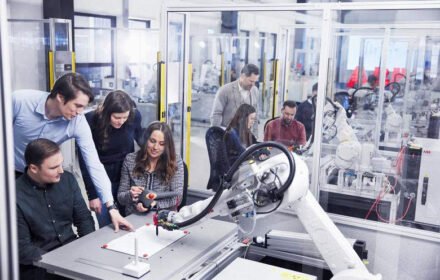



%20Ltd.,%20a%20key%20player%20in%20defense%20and%20aerospace%20electronics,%20is%20standardizing%20its%20product%20development.%20They%20are%20implementing%20Siemens%20Xcelerator’s%20Teamcenter%20and%20Polarion%20software.%20This%20move%20aims%20to%20unify%20data%20and%20processes%20across%20their%20manufacturing%20and%20testing%20facilities.%20Standardizing%20Product%20Lifecycle%20Management%20Data%20Patterns%20%5B…%5D&media=https://www.oiltechcontrols.com/wp-content/uploads/2025/10/Siemens-news-Sept-4-2025-web.png)
As an operations manager, this article on Data Patterns resonates deeply, but from a different angle than pure product development. Many discussions about industrial automation focus on the PLCs, robots, and SCADA systems themselves. However, the true bottleneck—and the greatest opportunity for efficiency—often lies in the engineering processes behind these systems. The synergy of PLM and ALM, as demonstrated here, is the unsung hero that can make or break a multi-million dollar automation project.
Consider a project my team recently undertook: building a custom automated assembly line for a medical device client. The line involved multiple robots, vision systems, and a complex network of PLCs and safety relays. Our initial challenge wasn’t the technology, but the management of thousands of interlinked components—from the mechanical drawings of a conveyor to the structured text code in a safety PLC and the requirement documents from the client. We were using a patchwork of folders, spreadsheets, and version-named files. It was a recipe for disaster.
Inspired by the principles outlined in this article, we pushed for a more integrated system. We used a PLM platform to manage all hardware-related data—the bill of materials for the control panel, the IO lists, and the mechanical layouts. Simultaneously, we applied ALM principles to the software lifecycle, managing the logic for the PLCs, the HMI screens, and crucially, tracing functional safety requirements (like those in IEC 61508) through to their implementation and test verification.
The result was a revelation in project control. During factory acceptance testing (FAT), when the client requested a change to a robot’s pathing that affected both the physical guarding and the safety PLC routine, the integrated system immediately flagged the dependencies. We knew exactly which electrical drawings, PLC code blocks, and risk assessment documents needed updating. This closed the “verification gaps” mentioned in the article before they could become costly errors on the shop floor. It streamlined the certification process and built immense trust with the client. This Data Patterns case shows that for system integrators and manufacturers alike, winning in today’s market is less about the gears and more about the digital thread that connects them all.