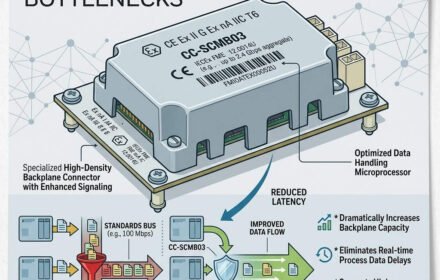
Redfish-Embedded PLCs Transform Data Center Cooling Efficiency

Redfish-Embedded PLCs Revolutionize Data Center Cooling
The Growing Data Center Challenge
The exponential growth of AI, cloud computing, and IoT is reshaping industrial automation and driving an unprecedented expansion in data center infrastructure. According to MarketsandMarkets, global data center cooling revenue will reach $18.5 billion by 2030, up from $8.2 billion in 2020—a CAGR of 8.5%. This surge is fueled by the urgent need for efficient thermal management as power densities continue to rise.
Cooling represents nearly 40% of total energy consumption in modern data centers, as reported by the U.S. Department of Energy. Therefore, new technologies such as Direct Liquid Cooling (DLC) and Liquid Immersion Cooling are rapidly replacing outdated air-based methods. These advanced techniques remove heat directly from high-performance servers, dramatically reducing energy usage and improving system longevity.
Understanding the Redfish Protocol
Redfish is a universal, RESTful API-based communication protocol developed by the Distributed Management Task Force (DMTF). It standardizes how servers, cooling systems, and power devices exchange data with centralized management systems. This open standard allows multi-vendor components to communicate seamlessly, eliminating the need for proprietary gateways or complex middleware.
Through Redfish, automation engineers can set power thresholds, monitor cooling loops, collect sensor data, and trigger event-based actions — all from a single platform. This interoperability streamlines control and simplifies integration across hybrid infrastructures.
How Redfish-Embedded PLCs Improve Industrial Control Systems
Traditional PLCs (Programmable Logic Controllers) rely on protocols like Modbus or EtherNet/IP for communication. However, when used in data centers, these controllers require gateways to convert industrial protocols into Redfish-compliant RESTful commands.
In contrast, Redfish-embedded PLCs integrate natively with IT systems, enabling real-time, bidirectional data exchange without additional hardware. This direct communication improves responsiveness, reduces latency, and enhances the precision of cooling control loops.
Key Functions of Redfish-Integrated PLCs
- ✅ Real-Time Cooling Control: Regulates fan speeds, pump flow, and valve positions based on instantaneous temperature data.
- ⚙️ Intelligent Sensor Integration: Collects and analyzes environmental data such as humidity, air velocity, and rack temperature via Redfish APIs.
- 🔧 Remote Management: Operators can adjust cooling zones or initiate shutdowns remotely through standard HTTP commands.
- Data Logging & Compliance: Redfish-PLCs store operational data for auditing and predictive maintenance analysis.
- Alarm Response: When thresholds are breached, PLCs automatically adjust cooling capacity or notify operators through Redfish alerts.
Advantages for Modern Data Centers
Redfish-enabled PLCs offer significant operational benefits that align with factory automation and industrial control system (ICS) objectives:
- Interoperability: Redfish provides a universal language that connects all devices in the cooling network.
- Scalability: These PLCs manage multi-rack environments and dynamic workloads efficiently.
- Energy Optimization: Continuous monitoring ensures only the necessary cooling is applied, minimizing energy waste.
- Reduced Complexity: Eliminating gateways simplifies installation and reduces potential failure points.
- Future-Proof Architecture: As data centers adopt edge computing and AI-driven control, Redfish provides the flexibility for rapid adaptation.
Industrial Application Example: Direct Liquid Cooling Loops
In a Direct Liquid Cooling (DLC) system, Redfish-embedded PLCs monitor inlet and outlet temperatures and dynamically regulate pump speed. They also communicate status data to the central Data Center Infrastructure Management (DCIM) platform via Redfish. As a result, operators gain instant visibility into system efficiency and can perform remote diagnostics without disrupting operation.
This integrated approach reduces cooling energy consumption by up to 25% compared to air-based systems, as reported by IEEE Spectrum. Moreover, predictive analytics based on logged data helps identify potential performance issues before they affect uptime.
Expert Insight from World of PLC
According to World of PLC, Redfish-embedded PLCs represent the next major leap in industrial automation. These controllers bridge the traditional gap between IT and OT (Operational Technology), enabling full visibility and control across data center ecosystems. From a practical standpoint, the elimination of intermediary gateways also reduces both capital and operational expenditures, while enhancing cybersecurity through standardized encryption and authentication mechanisms.
For more industrial automation insights or to explore Redfish-compatible PLC solutions, visit
World of PLC Limited.
Practical Use Cases and Implementation Scenarios
- Data Center Cooling Loops: Optimizing coolant flow to reduce power usage.
- Server Room Airflow Management: Controlling fan speed dynamically based on temperature maps.
- Power Distribution Control: Coordinating power and cooling through unified Redfish commands.
FAQs on Redfish-Embedded PLC Technology
Q1: How does Redfish improve interoperability in data centers?
Redfish standardizes communication across multi-vendor equipment, allowing seamless integration of servers, cooling, and power systems.
Q2: What are the key benefits of using Redfish-embedded PLCs?
They simplify control architecture, reduce energy use, and improve data transparency without needing protocol converters.
Q3: Can Redfish-embedded PLCs be used outside data centers?
Yes. These PLCs are ideal for any industrial environment requiring integrated monitoring and control—such as manufacturing, power plants, and smart buildings.
Written by World of PLC | Source references: MarketsandMarkets, DMTF, IEEE Spectrum, U.S. Department of Energy