Robotic Tube Forming Automation Takes Center Stage at FABTECH 2025
Strategic Partnership Showcases Manufacturing Innovation
Wauseon Machine and Kawasaki Robotics will demonstrate tube forming technology. This collaboration features at FABTECH 2025 from September 8-11. The event occurs at Chicago’s McCormick Place convention center. Attendees will visit booth B15001 for live demonstrations. They will experience seamless automation integration solutions.
Live Demonstrations Highlight Automation Synergy
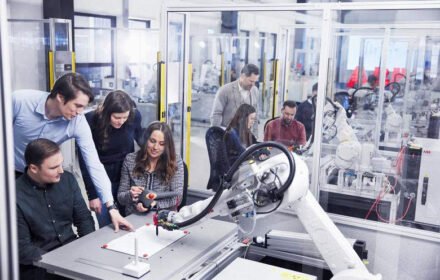
The exhibit will feature robotic tube forming processes. Visitors will witness actual manufacturing applications. Kawasaki robots will handle various tube configurations. Wauseon’s forming technology will shape precision components. This demonstrates complete factory automation solutions.
Addressing Modern Manufacturing Challenges
The partnership targets key industry pain points. Manufacturers struggle with high-mix production requirements. They also face volume flexibility challenges. This automation solution addresses both issues effectively. It supports collaborative manufacturing environments.
Kawasaki Robotics Brings Industrial Expertise
Kawasaki provides world-class robotic automation systems. Their robots feature advanced motion control capabilities. These systems integrate with various control architectures. They support PLC and DCS communication protocols. This ensures compatibility with existing factory automation.
Wauseon Machine’s Tube Forming Specialization
Wauseon offers four decades of tube forming experience. Their expertise includes precision end forming technology. They also provide complete turnkey automation systems. The company operates multiple manufacturing facilities. These support diverse industrial automation requirements.
Industry Context and Market Trends
The industrial robotics market shows significant growth. According to Statista, it will reach $75 billion by 2028. Tube forming automation represents a key growth segment. Manufacturers increasingly adopt robotic solutions. They seek improved flexibility and efficiency.
Technical Integration Advantages
- Seamless robot-to-forming machine communication
- PLC-controlled precision tube manipulation
- Real-time monitoring through control systems
- Rapid changeover capabilities for high-mix production
- Integrated safety systems for collaborative operation
Practical Applications in Factory Automation
The technology serves multiple industrial sectors. Automotive manufacturers use tube forming for exhaust systems. HVAC companies produce custom ductwork components. Furniture makers create metallic structural elements. Each application benefits from automated precision.
Author’s Perspective: World of PLC Analysis
From my experience at World of PLC, this partnership demonstrates important trends. Robotic integration with specialized machinery creates significant value. Control system compatibility remains crucial for implementation success. Furthermore, flexible automation addresses modern production challenges. For comprehensive industrial automation solutions including robotic integration, visit World of PLC.
Implementation Considerations
Manufacturers should evaluate several key factors. Production volume requirements dictate automation scale. Tube material characteristics influence equipment selection. Facility layout affects robotic work envelope planning. These considerations ensure optimal system performance.
Future Development Opportunities
Tube forming automation will continue evolving. Artificial intelligence will enhance process optimization. Advanced sensors will improve quality monitoring. More collaborative robots will enter production environments. These developments will drive further efficiency gains.
Frequently Asked Questions
What industries benefit most from tube forming automation?
Automotive, aerospace, and furniture sectors gain significant advantages. These industries require high-precision tubular components. Automation ensures consistent quality and production efficiency.
How does robotic integration improve tube forming processes?
Robots handle repetitive tasks with consistent precision. They enable complex manipulation beyond human capability. This reduces labor costs and improves workplace safety.
What control systems support this automation technology?
Standard PLC platforms typically manage these systems. They coordinate robot movements with forming machine operations. DCS solutions handle larger integrated manufacturing cells.
Exhibition Details and Visitor Information
FABTECH 2025 runs from September 8-11 in Chicago. The Wauseon-Kawasaki booth number is B15001. Demonstrations will run continuously throughout the event. Technical experts will be available for detailed discussions. Registration remains open through the event website.