



Emerson PACSystems RX3i IC695NIU001 Fail-Safe Behavior During Communication Loss
In distributed control systems, managing remote communication dropouts is critical for plant safety. The Emerson PACSystems RX3i IC695NIU001 Network Interface Unit (NIU) links remote I/O modules to a master controller. However, engineers frequently ask a vital question regarding network failures. When the IC695NIU001 disconnects from the master PLC, do the connected output modules hold their last state or reset to zero?

Understanding Fault Action Configurations in Remote I/O Networks
The behavior of your output hardware during a network drop is not a fixed physical constant. Instead, the specific Fault Action parameter configured within your engineering software determines the exact response. Engineers can assign distinct behaviors to individual output modules based on the safety requirements of the application.
The standard PACSystems RX3i configuration platform provides two primary choices for communication loss:
- Hold Last State: The remote hardware maintains its exact output values from the moment immediately preceding the network interruption.
- Default State: The hardware immediately transitions to a pre-defined, user-configured safety value, such as forcing all channels to an OFF state.
Therefore, assuming an automatic reset or hold without verifying the software configuration can introduce severe operational risks.
Maximizing Factory Automation Efficiency with Strategic Device Deployment
The IC695NIU001 expands hardware reach from centralized control enclosures directly to field equipment. Consequently, this architecture minimizes expensive long-distance sensor cable runs while simplifying long-term diagnostic access. Heavy industries like automotive manufacturing, petrochemical refining, and water treatment rely heavily on these distributed nodes to manage thousands of active data points.
In continuous manufacturing, an unexpected output state can lead to immediate mechanical damage or product waste. For example, a heating loop that locks to an ON state could cause dangerous thermal runaway. Therefore, automation professionals must perform a rigorous risk assessment before choosing between a state hold or an emergency reset.
Protocol Compatibility and Dynamic Network Synchronization Issues
The IC695NIU001 functions effectively across complex factory networks to guarantee real-time data frame transfers. However, successful integration requires absolute compatibility between the master PLC processor, firmware versions, and communication bus configurations. Network address mismatches or outdated device description files often block initial startup procedures during commissioning phases.
In my professional experience at PLC Pioneer, many field engineers mistakenly blame hardware failures when a master controller fails to recognize a newly added remote node. More often, the root cause traces back to firmware limitations or an unmapped network configuration file. Consequently, procurement teams should always audit existing CPU firmware before purchasing replacement network interface units.
Mitigating Electromagnetic Interference in Distributed Node Installations
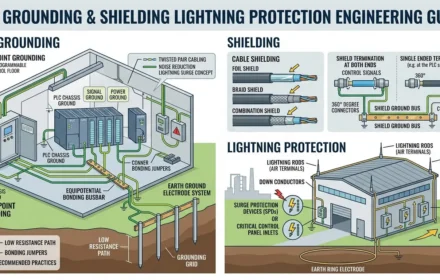
Remote I/O units frequently operate near high-voltage machinery rather than inside pristine, temperature-controlled server rooms. Therefore, these modules regularly face severe electromagnetic interference (EMI) from large variable frequency drives and industrial motors. Poor cable shielding or improper grounding networks can trigger intermittent communication dropouts between the NIU and the master rack.
To eliminate these network disruptions, installation teams must deploy high-quality industrial shielded CAT6 cables. Furthermore, isolating the core machine control network from the general office IT network prevents massive data broadcast storms. Implementing managed switches provides operators with superior diagnostic oversight to capture small packet drop errors before they cause a total system shutdown.
The Importance of Power Protection for Supervisory Hardware
While industrial PLCs can tolerate minor voltage dips, remote network interface units are highly sensitive to power fluctuations. A sudden voltage drop can corrupt local data tables, leading to erratic output states or accidental machine shutdowns. Therefore, deploying a dedicated double-conversion Uninterruptible Power Supply (UPS) for critical communication nodes is a strict industry best practice.
Additionally, engineers should install high-capacity external surge suppressors on both the main power feed and the physical communication lines. Protecting these pathways ensures that unexpected electrical grid transients do not damage the sensitive transceivers inside the IC695NIU001 module. Overlooking this simple step remains one of the primary causes of premature hardware failure on the shop floor.
Combating Alarm Fatigue through Intelligent HMI Engineering
System designers frequently introduce too many low-priority warnings during initial SCADA and HMI development phases. As a result, operators experience severe alarm fatigue and might overlook a critical warning regarding an impending mechanical failure. According to industry studies like the EEMUA 191 standard, an operator should ideally handle fewer than six alarms per hour during normal operations.
To fix this common issue, engineers must prioritize safety-critical conditions and apply built-in delay timers to highly volatile analog signals. For instance, brief pressure spikes should not trigger immediate audible sirens unless the condition persists. Effective control system interface design focuses entirely on delivering clear, actionable insights rather than overwhelming personnel with raw data variables.
—
System Optimization Checklist & Implementation Summary
- ✅ Verify Fault Parameters: Review the Fault Action status for every remote digital and analog output module before completing final system commissioning.
- ⚙️ Isolate Communication Paths: Keep industrial ethernet cables separated from high-voltage power lines by using dedicated metal wireways to block noise.
- 🔧 Validate Firmware Revisions: Cross-check hardware revisions against software catalogs to ensure seamless protocol exchange across the entire RX3i bus.
—
PLC Pioneer Expert Commentary
“Many maintenance teams focus entirely on code logic while completely neglecting how remote nodes behave during a network sever. Relying on default parameters without verification is a recipe for unpredictable machine movements. In modern automated environments, managing your fail-safe states is just as critical as optimizing your fastest logic scan loop. Always design your network topology with the assumption that communication will eventually drop.” — PLC Pioneer
Industrial Automation Frequently Asked Questions
Can an older master PLC monitor diagnostic faults directly from the IC695NIU001 node?
Yes, provided that the master rack utilizes a compatible communication module and the engineering environment possesses the correct GSD or hardware configuration profiles. The master controller reads dedicated status bits from the NIU to identify precise hardware faults, power failures, or bus disruptions instantly.
What is the standard procedure to reset a locked output module after a network recovery?
Most industrial applications require a manual fault acknowledgement from the primary operator station before resuming automated operations. Forcing an automatic restart upon network recovery introduces severe safety hazards, so control logic should always lock out outputs until personnel verify the field conditions.
How do environmental vibrations affect long-term module connection reliability?
High-vibration machinery can gradually loosen terminal blocks and degrade physical backplane connections over several years. To mitigate this risk, installation teams should utilize heavy-duty DIN rail end anchors and select spring-clamp terminal modules rather than traditional screw-type variants for high-vibration zones.
—
Application Scenario: Chemical Blending Tank Fail-Safe Integration
Consider a chemical processing plant utilizing an RX3i system where an IC695NIU001 manages a remote valve manifold over an industrial ethernet link. If a forklift inadvertently cuts the communication line, the automated control loop breaks instantly. Because engineers configured the critical feed valves to a default closed state, the system halts chemical transfers immediately. This proactive parameter setup prevents catastrophic tank overfills and ensures full compliance with local environmental safety mandates.
If you need to optimize your industrial network architecture or source highly reliable replacement modules for your control systems, explore our comprehensive inventory of verified automation hardware.
Discover comprehensive technical specifications and expert engineering support at our official resource center: PLC Pioneer Limited






%20links%20remote%20I/O%20modules%20to%20a%20master%20controller.%20However,%20engineers%20frequently%20ask%20a%20vital%20question%20regarding%20network%20failures.%20When%20the%20IC695NIU001%20disconnects%20from%20the%20%5B…%5D&media=https://www.oiltechcontrols.com/wp-content/uploads/2026/07/RX3i-IC695NIU001-Fail-Safe-Guide-Hold-Last-State-vs-Reset_.jpg)