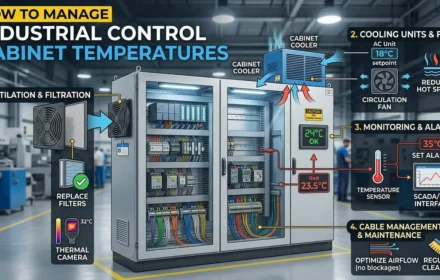
Will an SCP461-51 Cooling Fan Failure Cause a DCS System Shutdown?
In industrial automation, small components often dictate the reliability of massive operations. The SCP461-51 cooling fan unit serves as a prime example within Yokogawa CENTUM VP and CS 3000 systems. While it lacks control logic, its role in thermal management remains vital. Many engineers ask if a single fan failure triggers an immediate system trip. The answer depends on your specific cabinet environment and maintenance protocols.

The Critical Role of Thermal Management in DCS
The SCP461-51 unit maintains stable temperatures for sensitive controller and power modules. In sectors like oil and gas or petrochemicals, control cabinets run 24/7. High ambient heat creates significant thermal stress on internal circuitry. Forced cooling protects CPUs and I/O modules from premature aging. Effective airflow ensures hardware reaches its full design lifespan without unexpected degradation.
Thermal Protection Mechanisms and Logic Chains
A cooling fan failure rarely stops a controller instantly by design. However, it initiates a dangerous chain reaction. When airflow stops, internal cabinet temperatures rise rapidly. This heat can trigger power supply derating or CPU thermal protection. Consequently, the system may execute a protective shutdown to prevent permanent hardware damage. Even if the fan is not a “trip device,” it is a critical link.
Environmental Factors Influencing System Stability
Standard CENTUM cabinets operate best between 0°C and 40°C. In real-world plants, ambient temperatures often hover near these upper limits. Under such conditions, losing one SCP461-51 fan can push temperatures beyond safe margins within hours. Heat-sensitive components fail much faster in stagnant air. Therefore, harsh environments require immediate response to any cooling-related alarms.
Integrating Fan Status into System Alarms
Most CENTUM VP projects monitor fan status via maintenance diagnostics. These typically appear as secondary maintenance alarms rather than emergency trips. At Oiltech Controls, we observe that proactive integrators link these alarms to specific operational procedures. Technicians might reduce system loads or manually ventilate cabinets during an alert. This strategy prevents an unmanaged thermal shutdown during critical production phases.
Best Practices for Installation and Airflow
Incorrect installation often negates the benefits of a new SCP461-51 unit. Engineers must verify the airflow direction during every replacement. Reversed fans create heat pockets that trap energy inside the cabinet. Furthermore, you must maintain clear space around all inlets and outlets. Densely packed cabinets require unobstructed paths to dissipate heat effectively.
Combatting Dust and Mechanical Wear
Mechanical issues frequently cause fan failure before electrical problems occur. Dust accumulation and oil vapor are common “silent killers” in chemical plants. These contaminants increase friction and reduce rotational speed. We recommend cleaning or replacing units during annual turnarounds. Proactive replacement is significantly cheaper than dealing with an emergency hardware failure.
The Risks of Using Non-Original Components
Third-party fans might match the physical dimensions of the SCP461-51. However, they often lack the required Airflow (CFM) ratings or bearing quality. Industrial-grade fans must handle continuous duty in high-vibration environments. Using non-certified parts can lead to insufficient cooling or frequent motor burnouts. Always choose Yokogawa-certified components to ensure long-term system integrity.
Oiltech Controls Perspective on Reliability
At Oiltech Controls, we believe cooling is the foundation of system uptime. A fan is a reliability component, not a simple consumable. From our field experience, cooling failures cause 30% of preventable hardware faults. Treating thermal management as a priority protects your long-term investment in DCS infrastructure.
For high-quality parts and expert technical guidance on your control systems, visit Oiltech Controls Limited.
Maintenance Checklist for Cooling Units
- Verify Airflow: Ensure the fan blows in the correct direction during installation.
- Clear Obstructions: Check that no cables or filters block the air intake.
- Monitor Alarms: Never ignore a “Fan Failure” diagnostic on the HIS.
- Scheduled Cleaning: Remove dust from fan blades every six months.
- Inventory: Keep at least two SCP461-51 units in onsite spare parts stock.
Frequently Asked Questions (FAQ)
1. Does the system trip the moment a fan stops?
No, the system usually generates a maintenance alarm first. A shutdown only occurs if temperatures exceed safe hardware thresholds.
2. Can I replace the SCP461-51 while the system is running?
Yes, these units are typically hot-swappable. However, you must follow all safety protocols to avoid contact with moving parts.
3. How do I know if my fan needs replacement before it fails?
Look for increased acoustic noise or vibrations during inspections. These signs often indicate bearing wear or excessive dust buildup.