Analyzing Surge Suppression Failures in Honeywell FC-SDO-04110 Safety Modules
Understanding the Safety Manager Architecture and Role of FC-SDO-04110
Plant engineers often encounter complex hardware failures within safety instrumented systems. The Honeywell Safety Manager and FSC architecture utilizes specialized components designed for critical process shutdowns. Unlike standard distributed control system I/O cards, the Honeywell FC-SDO-04110 functions as a dedicated 110VDC, 4-channel safe digital output module. At Oiltech Controls Limited, we emphasize that understanding this specific safety platform prevents costly misdiagnoses during plant turnarounds.

Evaluating Solid-State Output Capacities and Inductive Loads
Industrial automation environments require precise electrical ratings to ensure reliable emergency shutdown execution. The FC-SDO-04110 provides solid-state source outputs with integrated short-circuit protection. However, technical manuals specify a maximum continuous load current of 55mA or 6W per channel, despite a higher maximum output capability of 325mA. When technicians drive large inductive loads like contactor coils without adequate external suppression, high-energy back-EMF transients bombard the internal output semiconductors.
How Surge Suppression Failures Propagate Across Channels
A common misconception in field maintenance assumes that if a specific channel fails, an adjacent channel will automatically burn out in a predictable pattern. In reality, the FC-SDO-04110 features four isolated output channels with distinct diagnostic monitoring. When an internal clamp or suppression device fails, the resulting high-voltage spike primarily damages the directly affected output stage. However, if transient energy breaches the shared internal power distribution or common protection paths, multiple channels may exhibit leakage currents, fail to turn off, or trigger simultaneous short-circuit alarms. To maintain high safety integrity across your factory automation infrastructure, follow these essential maintenance steps:
- ✅ Disconnect Field Loads First: Isolate all connected actuators before inspecting module status to prevent secondary electrical shocks.
- ⚙️ Review Channel Diagnostics: Examine individual channel deactivation codes and diode test faults via Safety Manager software rather than guessing.
- 🔧 Inspect Suppressor Circuits: Test external snubber networks and inductive load suppression diodes regularly to protect solid-state outputs.
Author’s Insight: Why Safety Modules Demand Complete Replacement Over Component Repair
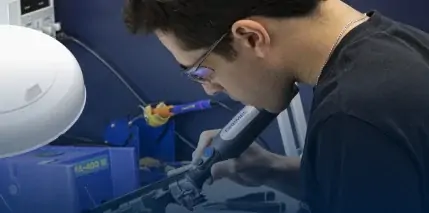
At Oiltech Controls Limited, our hands-on commissioning experience across heavy chemical and petrochemical facilities shows that attempting component-level repairs on safety output cards introduces unacceptable operational risks. When a diode test fault or multi-channel failure occurs, soldering new MOSFETs or discrete TVS diodes onto a safety module violates IEC 61508 standards and compromises diagnostic coverage. We strongly advise plant operators to replace faulty safety output cards entirely to preserve strict safety instrumented functions.
Comprehensive Troubleshooting Protocol for SDO Modules
Systematic diagnostic workflows save valuable production time during emergency shutdowns. Technicians must avoid treating safety modules like standard general-purpose PLC outputs. When a channel fault occurs, execute a thorough multi-step inspection:
- ✅ Verify Diagnostic Logs: Check Safety Manager event logs to distinguish between transient overloads and permanent hardware faults.
- ⚙️ Check Off-State Leakage: Measure voltage across open terminals to ensure no residual current leaks through damaged semiconductor switches.
- 🔧 Test Associated Actuators: Inspect the physical coils of driven valves and contactors for shorted turns or degraded suppression networks.
Frequently Asked Questions (FAQ)
Q: Does a failure on Channel 2 of the FC-SDO-04110 mean that Channel 1 or Channel 3 is definitely damaged?
A: Not necessarily. While a severe voltage surge can compromise internal shared power rails, damage does not follow a fixed sequence. Technicians must test all four channels independently for leakage, short circuits, and proper off-state behavior.
Q: Can I use standard commercial electronic components to repair a failed Honeywell safety output module?
A: No. Safety Manager modules operate under strict certification requirements. Field-level board repairs void safety ratings, compromise fault-tolerance, and violate regulatory compliance standards for safety instrumented systems.
Q: What is the most common cause of repeated output channel failures in 110VDC safety loops?
A: Inadequate external arc suppression across large inductive loads remains the primary culprit. Without proper snubber circuits or flywheel diodes, repeated back-EMF spikes slowly degrade solid-state switching components.
Are you looking to replace critical Honeywell safety modules or source verified hardware spares for your distributed control systems? At Oiltech Controls Limited, we specialize in supplying high-integrity industrial automation hardware and expert technical guidance for complex process control environments. Our team helps you maintain absolute plant safety and eliminate unexpected downtime. Visit our website today to explore our comprehensive inventory and connect with our safety system specialists.