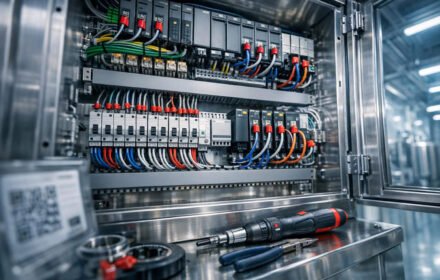
Yokogawa ADV551-P53/D5A00 vs ADV551-P00 Compatibility Analysis
Understanding Yokogawa CENTUM VP FIO Digital Output Modules
Plant engineers frequently manage Yokogawa CENTUM VP distributed control systems across continuous process plants like oil refineries and chemical facilities. When maintenance teams need to replace digital output modules, confusion often arises around part numbers and suffix codes. At Oiltech Controls Limited, we emphasize that matching core model numbers alone does not guarantee seamless hardware compatibility.
Industrial automation professionals understand that control system reliability depends on precise hardware integration. Yokogawa designs the ADV551 as a 32-channel, 24V DC isolated digital output module engineered to drive critical field actuators, solenoids, and interposing relays. However, system builders often overlook how suffix options alter physical cabling and terminal mapping. Therefore, maintenance personnel must examine complete part numbers rather than assuming universal interchangeability across the entire product family.
Process control environments demand zero tolerance for wiring errors or unverified hardware swaps. A minor oversight during module replacement can trigger unexpected interlock failures or stop production lines entirely. Consequently, plant operators must evaluate module suffixes, adapter types, and cable assemblies systematically before initiating any hot-swapping or cold-commissioning procedures in safety-instrumented systems.

Decoding the ADV551-P53/D5A00 Suffix and Adapter Architecture
Yokogawa part numbers contain critical configuration data embedded within their suffix codes. The ADV551-P53/D5A00 designation breaks down into distinct architectural layers that dictate how the module interfaces with field wiring networks. Understanding these specific components prevents costly procurement mistakes during urgent plant turnarounds.
The base designation ADV551 represents the core 32-channel isolated digital output hardware. The P53 suffix denotes specific environmental ratings, basic specifications, and standard status display options. Meanwhile, the /D5A00 suffix specifies the inclusion of the ATD5A-00 KS Cable Interface Adapter designed specifically for high-density digital signal routing.
Industrial communication standards dictate that interface adapters match field cabling perfectly. When an existing control cabinet utilizes the /D5A00 KS cable interface configuration, swapping in a standard ADV551-P00 module without checking connection formats creates immediate integration hurdles. The module core may slide into the FIO node successfully, but missing or mismatched adapters leave field signals stranded.
To clarify these structural differences, engineers should review the primary hardware constituents that govern Yokogawa digital output connections:
- ✅ Core Processing Card: The base ADV551 circuit board handles 32-channel switching logic and optical isolation across output terminals.
- ⚙️ Interface Adapters: Components like the ATD5A-00 manage specialized KS cable connections between the module and marshaling racks.
- 🔧 Signal Cables and Terminal Boards: Dedicated cabling such as AKB331 links output signals directly to terminal assemblies like AED5D.
Evaluating ADV551-P00 Replaceability Against Existing /D5A00 Setups
Plant procurement teams frequently ask whether an ADV551-P00 can directly replace an existing ADV551-P53/D5A00 module. The short answer is that direct physical replacement works only if the underlying cabling and interface adapters remain completely undisturbed.
Yokogawa connection documentation outlines several standard wiring methodologies for 32-channel digital cards. These configurations include pressure clamp terminals like ATD5S and ATD5D, dedicated KS cables such as AKB331, and standard terminal boards like AED5D. When an installation relies on the ATD5A-00 adapter specified by the /D5A00 suffix, the physical interface relies on that specific adapter assembly.
If maintenance technicians install an ADV551-P00 into a rack previously configured with a /D5A00 adapter, they must verify whether the P00 unit retains compatible backplane pinouts and physical connector geometry. In many cases, standard inventory units lack pre-configured adapters, meaning technicians must salvage the existing ATD5A-00 adapter from the old card or source a matching assembly separately.
Factory automation projects cannot afford guesswork when dealing with distributed control architecture. Engineers must inspect existing control cabinets to determine if terminal boards match incoming signal paths. Failing to verify adapter compatibility often forces emergency plant shutdowns while maintenance teams scramble for correct interface components.
Systematic Inspection Protocols Before Initiating Module Swaps
Replacing active DCS hardware in chemical plants or power generation stations requires strict adherence to pre-swap verification steps. Technicians should never rely solely on module faceplates when managing high-density digital output cards.
Step one involves reviewing the complete part number listed in system engineering drawings rather than trusting physical labels on installed hardware. Plant history files often contain outdated documentation if previous maintenance crews performed unrecorded modifications during past outages.
Step two requires mapping all thirty-two output channels to verify that safety interlocks and motor control circuits match expected software addresses. A channel mismatch can cause a digital output command to trigger the wrong valve or pump during startup sequences.
Step three mandates checking power supply rails and isolation barriers. Because the ADV551 utilizes 24V DC isolated power, technicians must confirm that external loop power supplies remain stable and free from ground faults before energizing replacement hardware.
To streamline the replacement workflow and ensure absolute operational safety, maintenance teams should implement these core procedural safeguards:
- ✅ Document Channel Assignments: Record every active loop from Channel 01 through Channel 32 before unsealing any replacement modules.
- ⚙️ Verify Adapter Integrity: Inspect physical pins on ATD5A adapters for corrosion, bending, or wear before mounting new cards.
- 🔧 Perform Three-Tier Testing: Validate DCS software status, verify actual terminal voltages with a multimeter, and observe field actuator response.
Author’s Insight: Why Suffix Blindness Compromises Plant Reliability
At Oiltech Controls Limited, our hands-on field engineering experience across complex petrochemical complexes reveals a recurring maintenance pitfall. Many procurement specialists and junior technicians treat Yokogawa FIO module part numbers as interchangeable based solely on the main family identifier. They order base units like the ADV551-P00 without checking for crucial suffix codes like /D5A00.
This oversight stems from a common misconception that DCS cards function like consumer computer hardware where standard ports accept any peripheral. In heavy industrial automation, however, physical adapter configurations and cable interfaces dictate whether a control card can actually communicate with field marshaling cabinets. When a replacement card arrives without the correct interface adapter, critical startup windows close while engineers scramble for spare parts.
We strongly recommend establishing rigorous material verification protocols within plant maintenance departments. When dealing with legacy distributed control systems, spare parts purchasing must mirror original engineering bill-of-material specifications. Sourcing exact matches for modules like the ADV551-P53/D5A00 eliminates guesswork, protects plant availability, and prevents costly unplanned downtime.
Frequently Asked Questions (FAQ)
Q: Can I use an ADV551-P00 as a direct physical replacement for an ADV551-P53/D5A00 card?
A: You can insert the core module into the same FIO slot, but it is not a direct drop-in replacement if your system relies on the /D5A00 KS cable interface adapter. You must verify that the replacement unit accommodates your existing ATD5A-00 adapter and AKB331 cabling without altering signal paths.
Q: What happens if I ignore the /D5A00 suffix when ordering a replacement Yokogawa digital output module?
A: Ignoring the suffix often results in receiving a base module that lacks the required interface adapter. Consequently, existing factory cabling may fail to connect securely, leaving field digital outputs unmapped and disabling connected process valves.
Q: How can I verify that my digital output channels are functioning correctly after a module replacement?
A: Execute a comprehensive three-tier verification process. First, confirm healthy module status and output commands within the CENTUM VP engineering software. Second, measure actual 24V DC output voltages at the terminal board using a calibrated multimeter. Third, observe physical field actuator responses to ensure complete loop integrity.
Are you managing Yokogawa CENTUM VP distributed control systems or looking to source verified FIO spare parts for your industrial automation architecture? At Oiltech Controls Limited, we specialize in supplying high-reliability process control hardware and expert technical guidance for demanding industrial environments. Our team helps you eliminate configuration errors, match complex suffix codes, and maintain absolute plant availability. Visit our website today to explore our extensive inventory and connect with our DCS hardware specialists.