Troubleshooting Yokogawa AAI543-S50 Redundant Output Status Discrepancies
Understanding Redundant Control Roles and Status
Plant engineers managing Yokogawa CENTUM VP systems frequently review analog output modules for hardware health. When configuring the AAI543-S50 output module in a redundant pair, technicians often notice one unit displaying “Run” while the other shows “Ready.” At Oiltech Controls Limited, we emphasize that this status difference is entirely normal for healthy distributed control systems. The primary module actively drives the control valves, whereas the secondary unit remains in standby mode, ready to take over instantly if a failure occurs.
Evaluating Output Synchronization and Bumpless Transfer
True hardware redundancy requires more than simply installing dual modules in a control chassis. The standby AAI543-S50 unit must maintain real-time data synchronization with the active controller. If synchronization fails, a sudden switchover can cause dangerous output jumps, destabilizing critical loops like boiler fuel feed or reactor pressure. Therefore, maintenance teams must verify that the standby module continuously tracks live output signals without communication lag.
Addressing Configuration Mismatches and Replacement Issues
When technicians replace an aging AAI543-S50 module during a scheduled shutdown, the new hardware sometimes stays stuck in the Ready state without synchronizing. To ensure seamless integration within your factory automation environment, follow these essential maintenance steps:
- ✅ Verify Database Configurations: Confirm that the node address, slot position, and channel parameters match the engineering database before inserting replacement hardware.
- ⚙️ Check Firmware and Revisions: Match module hardware revisions carefully, because version mismatches between control nodes can block redundancy synchronization.
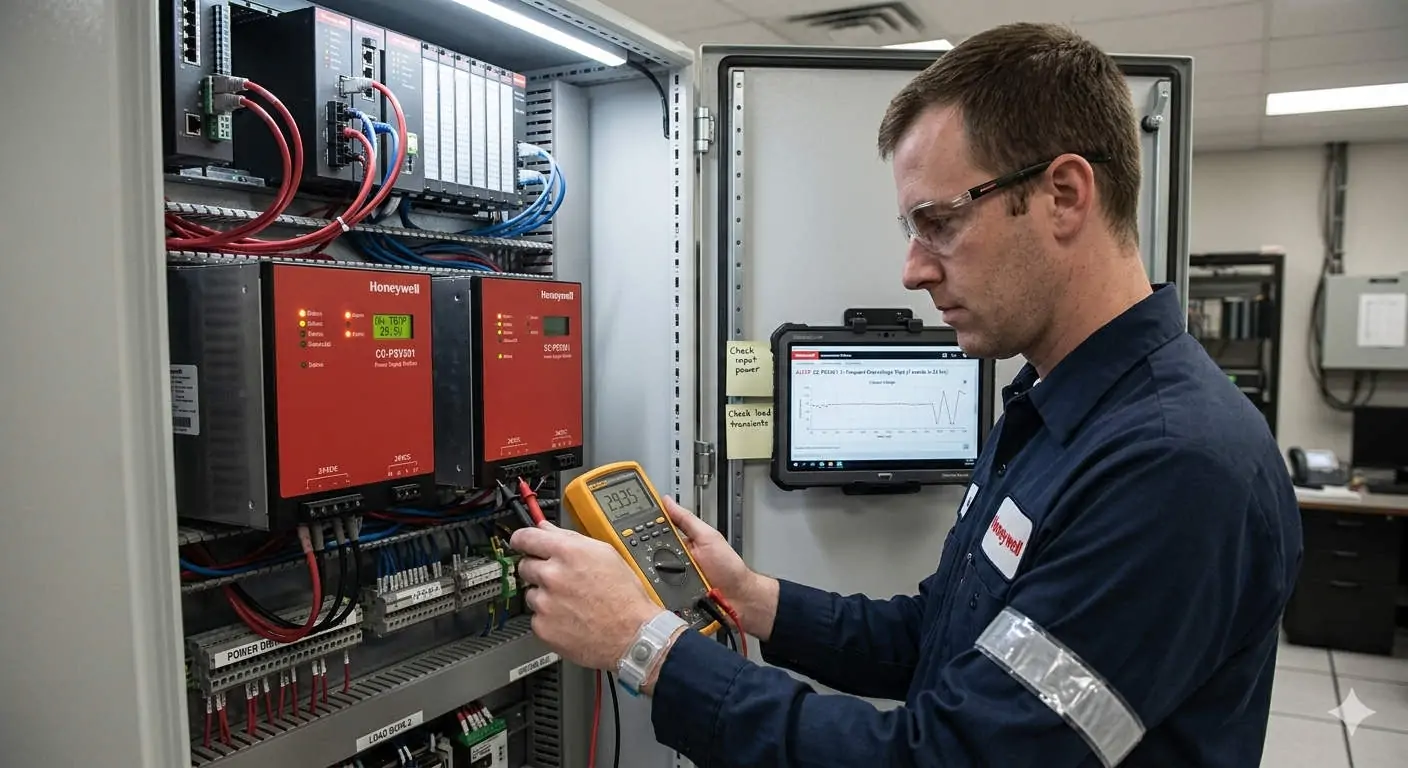
- 🔧 Inspect Field Output Loops: Test loop impedance and wiring integrity using a calibrated meter to ensure downstream actuators accept control signals smoothly.
Author’s Insight: Why Proper Redundancy Planning Matters
At Oiltech Controls Limited, our hands-on commissioning experience in chemical and energy plants shows that many unnecessary hardware replacements stem from misinterpreting normal system status flags. A “Run” and “Ready” combination usually indicates a healthy, functioning redundant pair. We advise maintenance personnel to focus on synchronization diagnostics and module initialization protocols rather than assuming a module failure whenever status indicators differ.
Frequently Asked Questions (FAQ)
Q: Does a Run and Ready status combination mean my redundant system is malfunctioning?
A: No. In standard CENTUM VP operations, one module must be active (Run) while the backup remains prepared (Ready). True failure only occurs if the Ready unit refuses to synchronize or fails during a manual switchover test.
Q: What causes a newly installed AAI543-S50 module to remain in the Ready state indefinitely?
A: Persistent Ready status typically points to uninitialized firmware, mismatched hardware revisions, or incomplete I/O configuration downloads within the engineering station.
Q: How can I safely test module redundancy without risking unexpected plant trips?
A: Always review I/O diagnostics on the HIS station first, verify that the standby unit reports zero alarms, and perform controlled switchover tests only during approved maintenance windows.
Are you looking to optimize your Yokogawa DCS infrastructure or source reliable redundant output modules? At Oiltech Controls Limited, we specialize in supplying high-performance industrial automation hardware and expert engineering guidance for critical process control systems. Our team helps you maintain absolute plant reliability and eliminate unexpected downtime. Visit our website today to explore our comprehensive inventory and connect with our automation specialists.