Resolving “Signal Attenuation” Alarms on GE IS200ERIOH1A / IS200ERIOH1AAA Fiber Optic Links
The Critical Importance of Fiber Optic Signal Integrity
In GE Mark VI/VIe control systems, the IS200ERIOH1A and IS200ERIOH1AAA Remote I/O boards facilitate high-speed, deterministic data exchange. These modules rely on fiber optic communication to ensure precise turbine control and plant safety. When a “Signal Attenuation” alarm triggers, it often signals degraded optical power, threatening system stability. At Oiltech Controls Limited, we frequently diagnose communication drops in harsh industrial environments. Our experience shows that cleaning the optical interface is often more effective than replacing expensive hardware.

Common Sources of Optical Degradation
Industrial control cabinets frequently house sensitive fiber optic ports in environments prone to contamination. Lubrication oil vapors, microscopic dust from cooling fans, and even trace moisture can settle on connector ferrules. Over time, these contaminants introduce decibels (dB) of optical loss, pushing transceivers toward their power budget limits. Therefore, we advise maintenance teams to view fiber contamination as a primary suspect rather than an electronic failure. Statistical field analysis indicates that nearly 60% of signal-related alerts in distributed I/O networks stem from dirty connections.
Best Practices for Fiber Optic Maintenance
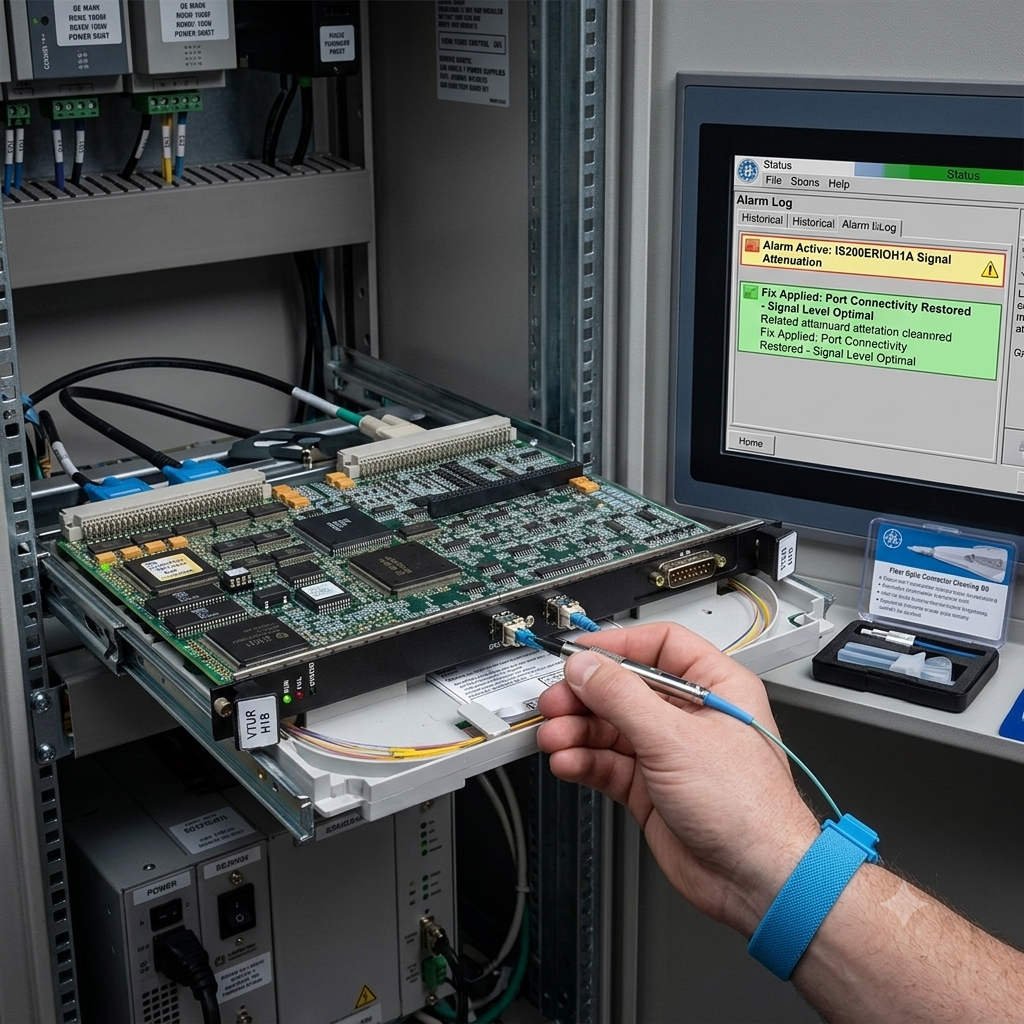
Performing maintenance on fiber optic links requires a disciplined approach to prevent permanent damage to the delicate glass faces. We recommend following these standardized steps to restore signal quality safely:
- ✅ Verify Before Action: Always use the diagnostic interface to confirm which specific channel reports the attenuation fault.
- ⚙️ Inspect for Contamination: Utilize a fiber inspection microscope to check for oil, dust, or scratches before cleaning.
- 🔧 Use Approved Materials: Apply only 99% Isopropyl Alcohol (IPA) with lint-free, optical-grade wipes to avoid leaving residue.
- 🔍 Clean Both Mating Surfaces: Remember to clean both the cable jumper and the transceiver port within the I/O module.
Preventing Recurring Communication Faults
Reliability in distributed I/O systems relies on maintaining adequate optical margins, even during temperature fluctuations or mechanical vibrations. A marginal fiber link may function temporarily but fail under high-stress conditions like rapid load changes in turbines. In addition to regular cleaning, we suggest verifying that your fiber cables are routed with proper bend radii. Moreover, integrating annual fiber inspection into your preventive maintenance schedule ensures long-term operational success and drastically reduces unplanned downtime in your factory automation systems.
Frequently Asked Questions (FAQ)
Q: How can I distinguish between a dirty fiber and a failed optical transceiver?
A: Clean the connector and port thoroughly. If the signal attenuation values return to normal, the fault was contamination. If the values remain high, inspect the cable for damage or consider a transceiver test.
Q: Are there specific environmental hazards I should look for in my cabinet?
A: Yes. High-vibration areas often loosen connectors, while proximity to oil-lubricated equipment frequently leads to film buildup on exposed optical ferrules.
Q: Why does the system report attenuation rather than a complete link failure?
A: Modern transceivers have a “power budget.” As the connection degrades, the signal strength drops. The controller flags this as attenuation when the margin becomes too thin to guarantee reliable, error-free data transfer.
Reliable communication is the foundation of effective plant management. At Oiltech Controls Limited, we provide expert technical guidance and high-quality spare parts for GE Mark VI and Mark VIe architecture. Whether you are addressing recurring fiber optic alarms or planning a complete system migration, our team offers the support you need. Visit our website to explore our extensive inventory and learn how we can help you maximize your facility’s operational uptime.