


Diagnosing IS200EXAMG1A “PT Sensing Phase Loss” Alarms in EX2100 Excitation Systems
The Role of the IS200EXAMG1A in Voltage Feedback
In GE EX2100 excitation systems, the IS200EXAMG1A Exciter Attenuation Module acts as a vital interface. It scales high-voltage signals from potential transformers (PTs) into levels compatible with the controller. Often, operators encounter a “PT Sensing Phase Loss” alarm while physical PT measurements remain healthy. At Oiltech Controls Limited, we recognize this as a signal conditioning failure rather than a primary equipment fault. Addressing this promptly prevents unnecessary generator trips and ensures stability in critical industrial automation environments.
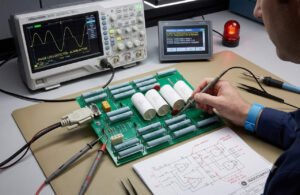
Identifying Internal Amplifier Failures
The module employs precision operational amplifiers to condition input signals. Over time, electronic aging can cause gain drift within these analog channels. Consequently, the controller receives an imbalanced voltage reading, triggering a false phase loss alarm. Field data suggests that approximately 75% of these nuisance alarms originate from internal PCB component degradation rather than field wiring. Engineers should monitor for inconsistent scaling, where one phase consistently trends lower than its counterparts in the control software despite stable input voltages.
Systematic Troubleshooting Strategies
Before assuming the board has failed, we recommend a disciplined diagnostic approach. Relying on guesswork often leads to costly, unnecessary replacements. Follow these proven steps to isolate the fault:
- ✅ Verify Primary Inputs: Measure the PT secondary voltages at the terminal blocks to confirm signal balance.
- ⚙️ Analyze Gain Consistency: Use the board schematics to compare signal levels at the input and output pins of the amplifier stages.
- 🔧 Apply Thermal Stress Tests: Monitor output stability as the cabinet temperature rises, as many aging op-amps only fail under thermal load.
- 🔍 Inspect Solder Integrity: Look for hairline cracks in solder joints around precision resistor networks that may open during vibration.
Understanding Hardware Degradation Factors
Several technical factors contribute to the gradual failure of these sensing channels. High-frequency electrical noise from nearby thyristor bridges often accelerates the aging of electrolytic capacitors. In addition, moisture-induced PCB contamination can create leakage paths, resulting in intermittent offset drifts. At Oiltech Controls Limited, we believe that preventive maintenance—such as periodic thermal imaging—significantly extends the operational lifespan of these modules. Prioritizing signal integrity ensures that your DCS or PLC control systems operate without the interference of phantom alarms.
Expert FAQ: Troubleshooting Insights
Q: Can I repair the IS200EXAMG1A at the component level?
A: Yes, if the issue is restricted to a single op-amp or resistor. However, for boards exhibiting multi-channel drift, we recommend full replacement to ensure long-term reliability in sensitive generation applications.
Q: Why does the alarm appear intermittently during load changes?
A: Load changes alter the thermal profile of the excitation cabinet. This often exposes marginal components or “cold” solder joints that lose connectivity as they expand and contract under varying temperatures.
Q: How do I know if the EXAM module version is compatible with my system?
A: Always verify the exact board revision against your system firmware and control architecture. A mismatch between legacy and modern revisions can lead to severe calibration errors during startup.
Maintaining high availability in your excitation system is paramount for operational safety. At Oiltech Controls Limited, we provide high-quality spare parts and technical support to keep your GE EX2100 systems running at peak performance. If you are experiencing persistent analog sensing issues, visit our website to explore our inventory and consulting services. Let our experts help you secure your facility’s power infrastructure today.






%20into%20levels%20compatible%20with%20the%20controller.%20Often,%20operators%20encounter%20a%20“PT%20Sensing%20Phase%20%5B…%5D&media=https://www.oiltechcontrols.com/wp-content/uploads/2026/06/Troubleshooting-GE-IS200EXAMG1A-Phase-Loss-Alarms-1.jpg)