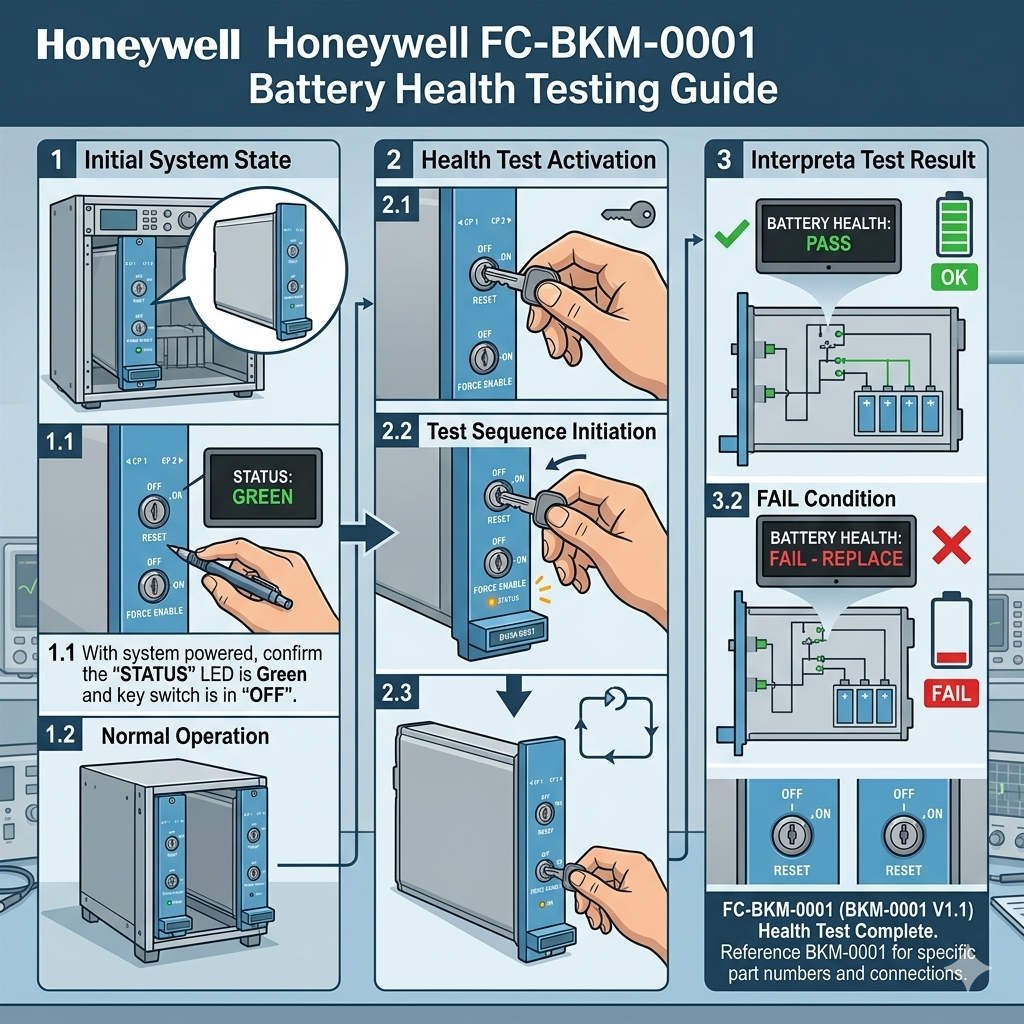
Step-by-Step Guide: Testing the Health of the Honeywell FC-BKM-0001 Battery Module
The Vital Role of Battery Backup in Industrial Safety Systems
The Honeywell FC-BKM-0001 battery module serves as a critical safeguard for safety managers and control systems. In modern industrial automation, this module prevents data loss during unexpected power failures. Specifically, in petrochemical and pharmaceutical plants, a battery failure can lead to catastrophic batch losses or safety violations. Therefore, proactive health monitoring is essential to maintain high-integrity control systems.
Evaluating Battery Voltage Stability Under Real-World Loads
Many technicians make the mistake of measuring voltage without a load. However, a battery might show a healthy nominal voltage while lacking the capacity to support a live system. During a power transition, the module must sustain the controller memory without dropping below the 85% threshold. As a result, you should perform voltage decay tests under simulated load conditions to identify aging cells early.
Using Internal Resistance as a Key Health Indicator
Internal resistance, or impedance, offers the most accurate look into a battery’s chemical health. As batteries age, their internal resistance naturally increases, leading to heat generation and reduced current delivery. In harsh factory automation environments like refineries, high temperatures accelerate this degradation. We recommend using a specialized battery analyzer to compare current impedance against the manufacturer’s baseline. Generally, a 30% increase in resistance signals that a replacement is necessary.
Measuring Backup Duration for Critical Process Continuity
The ultimate test for any FC-BKM-0001 module is its actual runtime capability. Even if the voltage looks stable, reduced chemical capacity may shorten the backup window during a total blackout. To verify this, engineers should conduct controlled discharge tests during scheduled maintenance. This ensures the DCS or PLC remains powered long enough to complete emergency shutdown procedures or secure validated process data.
Best Practices for Installation and Thermal Management
Temperature is the single biggest factor affecting the lifespan of the FC-BKM-0001. At Oiltech Controls Limited, we have observed that installing batteries near heat-heavy power supplies reduces their life by 40%. For optimal performance, maintain an ambient temperature between 20°C and 25°C. Additionally, always use locking connectors in high-vibration environments like offshore platforms to prevent intermittent voltage drops.
Transitioning from Reactive to Preventive Maintenance
Waiting for a “Battery Low” alarm is a high-risk strategy that often leads to unplanned downtime. Instead, implement a scheduled replacement cycle every 3 to 5 years, regardless of apparent health. This approach aligns with IEC 60079 standards for hazardous areas. Furthermore, recording the installation date directly on the module casing prevents oversights during busy maintenance windows.
Expert Insights from Oiltech Controls Limited
From our extensive field experience, we believe the FC-BKM-0001 is a robust component, but it is often neglected until a crisis occurs. Modern industrial automation trends emphasize predictive maintenance. Consequently, we suggest integrating your battery health data into your asset management software. By tracking impedance trends over time, you can predict failure months before it happens.
To secure authentic Honeywell modules and expert technical consultation, visit Oiltech Controls Limited for industry-leading support.
Essential Maintenance Checklist
- ✓ Voltage Check: Monitor voltage drop during active load testing.
- ✓ Impedance Test: Measure internal resistance quarterly in hot environments.
- ✓ Environment Audit: Ensure no heat-generating hardware is mounted directly below the battery.
- ✓ Connection Integrity: Verify terminal tightness to avoid micro-arcing.
- ✓ Log Retention: Maintain a clear record of installation dates and test results.
Frequently Asked Questions
Q1: Why does my system show a “Healthy” status while the battery is 4 years old?
System diagnostics often only check for basic continuity or open-circuit voltage. They may not detect a rise in internal resistance or a loss of total capacity. Based on our field data, we recommend replacement after 4 years regardless of the displayed software status to ensure reliability.
Q2: Can environmental factors like humidity affect the FC-BKM-0001?
While the module is sealed, extreme humidity can lead to terminal corrosion over several years. This increases contact resistance, which might mimic a failing battery. Always inspect and clean terminals during your annual preventive maintenance check.
Q3: Is it safe to hot-swap the FC-BKM-0001 while the system is running?
Yes, Honeywell safety managers typically allow for hot-swapping. However, you must ensure the primary power supply is stable. Replacing the battery during an active power fluctuation could lead to a controller reset and process interruption.
Typical Solution Scenario: Refinery Backup Power
In a large-scale refinery, a PLC controlling a flare system relied on the FC-BKM-0001 for memory retention. By implementing biannual impedance testing, the site team discovered a 50% rise in resistance in modules located in poorly ventilated cabinets. They replaced the units before the summer heat peaked, avoiding a potential “Cold Start” scenario that would have cost the plant millions in lost production time.