Can You Replace the Fiber Port on Emerson DeltaV SE4050E2C0 Modules Individually?
Understanding SE4050E2C0 Hardware Replacement Constraints
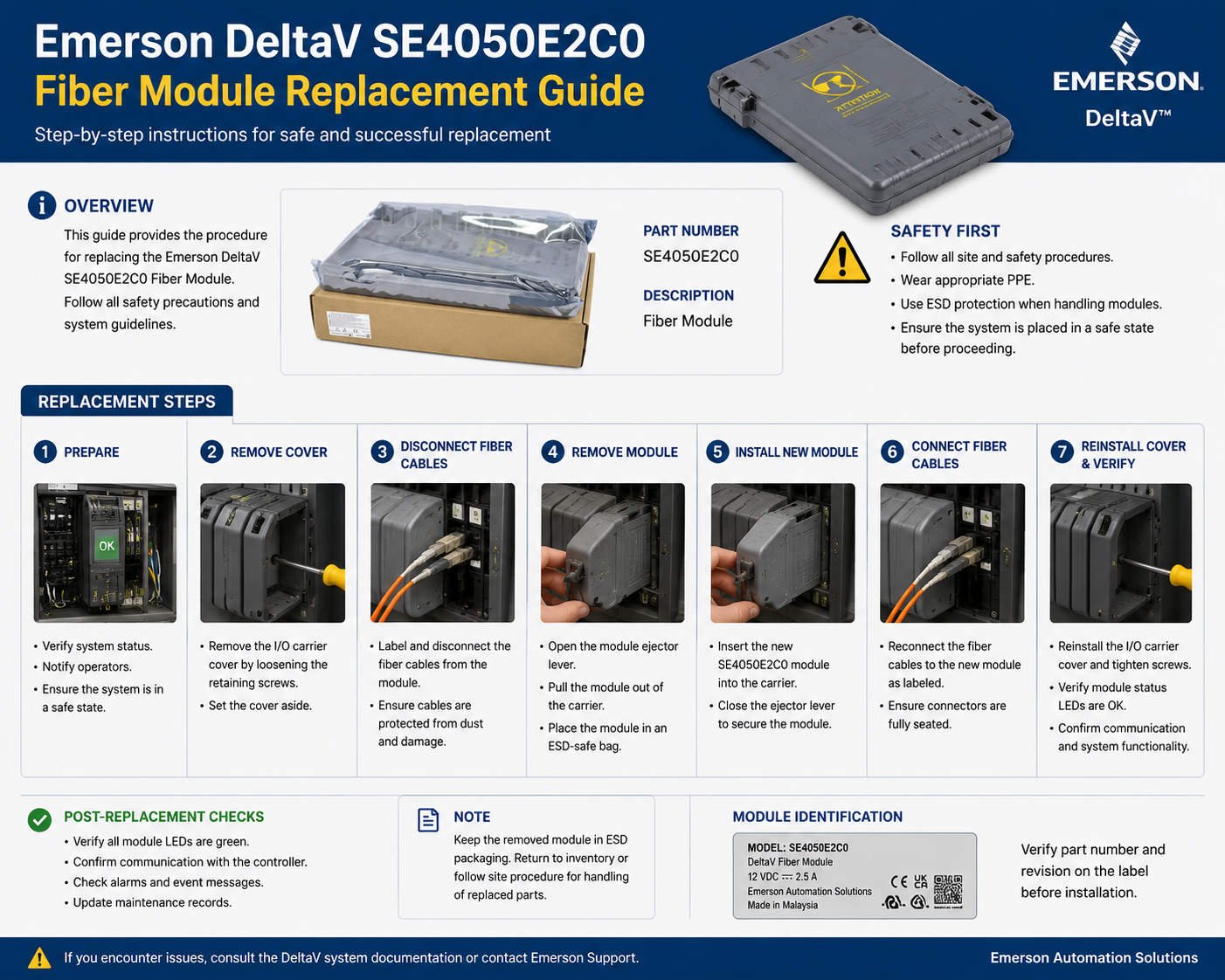
When the fiber optic port on an Emerson DeltaV SE4050E2C0 communication module fails, engineers often ask if individual repairs are possible. In most industrial automation environments, you cannot replace just the fiber interface component. Emerson designs these modules with integrated circuitry, meaning the fiber transceiver is soldered directly to the main board. Consequently, the industry standard is to replace the entire module rather than attempting board-level micro-repairs.
The Core Value of Fiber Optics in Control Systems
The SE4050E2C0 serves a vital role in large-scale DCS networks by bridging long distances with high reliability. Its primary value lies in providing immunity to electromagnetic interference (EMI). In sectors like LNG, petrochemicals, and refining, high-power equipment often creates massive electrical noise. Therefore, fiber optic links ensure that critical process data remains stable, preventing controller disconnects or I/O refresh errors that could lead to plant trips.
Technical Insights into Signal Integrity and Isolation
Unlike standard copper RJ45 cables, the SE4050E2C0 fiber interface provides total electrical isolation. This feature is crucial for preventing ground loops between remote control rooms and local field cabinets. In our experience at Oiltech Controls Limited, many communication failures stem from potential differences between distant grounding systems. By using fiber, you eliminate these circulating currents, which significantly reduces the hardware failure rate of your network switches and interface cards.
Environmental Endurance and Heat Management
Industrial communication modules must withstand harsh conditions, including temperatures exceeding 40°C and corrosive atmospheres. Prolonged exposure to high heat often degrades the optical sensitivity of the transceiver over time. Instead of failing instantly, the module may produce an increasing bit error rate (BER). As a result, maintaining proper cabinet ventilation and air filtration is often more effective than simply swapping hardware. Preventive cooling strategies extend the lifespan of your critical network assets.
Strategic Maintenance and Diagnostic Best Practices
Before condemning an SE4050E2C0 module as “broken,” field technicians should perform a comprehensive link diagnostic. Often, perceived hardware failures are actually caused by contaminated fiber end-faces or excessive cable bending. Industry reports suggest that over 70% of optical link issues are related to physical layer quality. We recommend using an optical power meter to verify that the signal strength falls within Emerson’s specified thresholds before initiating a module replacement.
Oiltech Controls Limited Expert Commentary
At Oiltech Controls Limited, we have observed that many “failed” fiber ports are actually victims of poor surge protection on the power supply side. While fiber optics provide signal-level isolation, the module’s power rails remain vulnerable to lightning or switching transients. We strongly advise installing DIN-rail surge protectors in lightning-prone areas like offshore platforms. For high-performance replacements and technical consulting, visit our catalog at Oiltech Controls Limited.
Essential Field Maintenance Checklist
- ✓ Surface Inspection: Use a fiber microscope to check for dust or scratches on the patch cord.
- ✓ Bending Radius: Ensure optical cables do not exceed their minimum allowed curve to prevent signal attenuation.
- ✓ SFP Compatibility: Avoid using non-industrial third-party transceivers, as they often lack sufficient temperature ratings.
- ✓ Grounding: Verify that the control cabinet grounding meets IEC 61326 standards to protect the PHY layer.
Frequently Asked Questions
Q1: Why is it risky to use third-party fiber converters with DeltaV systems?
Commercial converters lack the deterministic timing and low jitter required by DeltaV control networks. Using non-certified hardware can cause intermittent controller drops that are extremely difficult to troubleshoot during peak production hours.
Q2: Can I perform a “hot swap” on the SE4050E2C0 module?
Yes, DeltaV communication modules generally support hot-swapping. However, you must ensure that your network topology provides redundant paths. If you pull a non-redundant module, you will lose communication with all downstream nodes immediately.
Q3: What are the early warning signs of fiber port degradation?
The most common sign is a gradual increase in “CRC Errors” or “Retransmissions” in the DeltaV Diagnostics tool. If these numbers rise while the plant load is steady, the optical transceiver is likely losing its receiver sensitivity.
Solution Scenario: Offshore Platform Network Recovery
An offshore facility experienced frequent network lag during storm seasons. Technicians initially suspected the SE4050E2C0 modules. However, after an audit by Oiltech Controls Limited, we discovered that moisture had seeped into the outdoor junction boxes. By cleaning the connectors and replacing the SE4050E2C0 with the latest hardened version, the platform achieved zero-packet-loss communication for over 18 months.