Achieving High Availability with GE Mark VI/VIe Analog Input Terminal Boards
The Architecture of Dual I/O Pack Redundancy
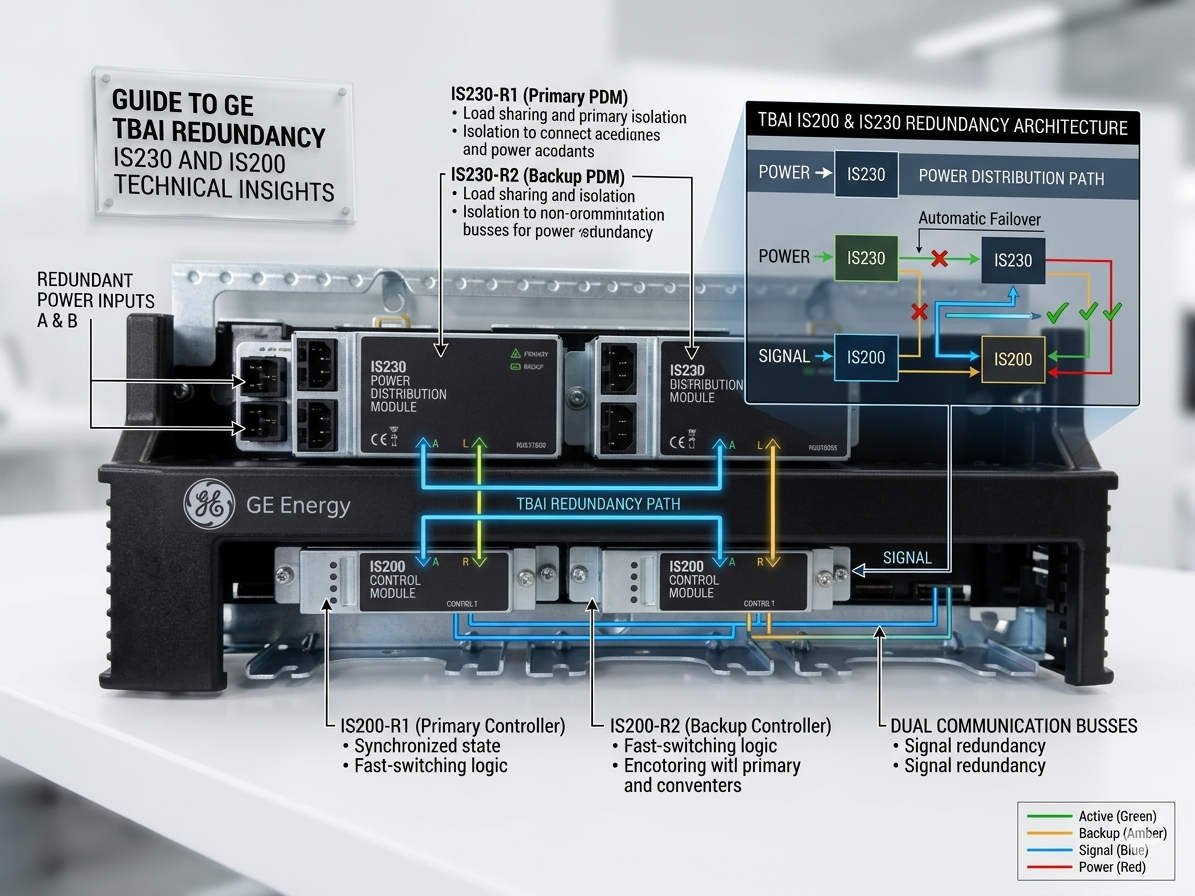
In complex industrial automation environments, such as power generation and petrochemical processing, signal interruption is not an option. The IS230TBAIH2C, IS200TBAIH1C, and IS200TBAIH1CED terminal boards serve as the backbone for analog signal acquisition. By utilizing these boards, systems can connect to two independent I/O packs simultaneously. Consequently, if one pack encounters a hardware failure or power instability, the second pack maintains communication seamlessly. This redundancy ensures that critical measurements—like pressure, temperature, and vibration—remain online, preventing unnecessary emergency shutdowns. At Oiltech Controls Limited, we frequently observe that this architecture significantly lowers operational risk in continuous-process manufacturing.

Engineering Insights for Signal Integrity
High-performance control systems rely heavily on stable, low-noise signal acquisition for 4–20 mA transmitters and RTDs. While the TBAI series design effectively separates field wiring from communication paths, external environmental factors often threaten accuracy. In our field experience, electromagnetic interference from nearby variable frequency drives (VFDs) or excitation systems often causes analog drift. Therefore, we strongly recommend that engineers adhere to strict grounding protocols. Grounding cable shields at only one end—typically the marshalling cabinet side—effectively mitigates ground loop issues. Furthermore, maintaining physical segregation between analog signal lines and high-voltage power cables remains a critical industry best practice for achieving IEC-compliant electromagnetic compatibility.
Managing Transitions Between Mark VI and Mark VIe Systems
Migration projects involving legacy IS200-series boards and newer IS230-series components require meticulous planning. A common misconception in factory automation is that mechanical fitment guarantees system interoperability. In reality, firmware revisions and I/O pack pairing are equally vital. Before replacing legacy hardware, engineers must verify compatibility within the ControlST environment. Mismatched configuration files often lead to failed online downloads during critical commissioning windows. If you are navigating an upgrade path for your PLC or DCS architecture, ensuring that your PAIC or VAIC I/O packs are fully supported by your controller’s current application code is essential to project success.
Practical Tips for Reliable Installation
- Secure Hardware Seating: In high-vibration environments like turbine enclosures, always verify that locking tabs are fully engaged. Thermal cycling often loosens connections over time.
- Proactive Surge Protection: Since TBAI boards are not primary surge suppressors, install external protection for any analog signal runs exceeding 100 meters, especially in lightning-prone regions.
- Systematic Validation: During Factory Acceptance Testing (FAT), intentionally disconnect one I/O pack to confirm the system maintains stable process values without triggering HMI alarms.
Common Troubleshooting & Field Experience (FAQ)
Q: Why do I see intermittent IONet communication alarms even after replacing a board?
A: Often, this is not a hardware fault but a mechanical issue. Check for loose Ethernet connectors or strain on the cables. Vibration inside the turbine cabinet can cause even perfectly functional components to experience connectivity gaps.
Q: Is it possible to mix IS200 and IS230 series boards within the same cabinet during a partial migration?
A: While it may be physically possible, we strongly advise against it unless your ControlST configuration specifically supports the mixed architecture. Consistency across the cabinet usually simplifies future maintenance and troubleshooting.
Q: How does the “dual-pack” configuration impact the overall maintenance budget?
A: By allowing for online maintenance—where you can replace a failed pack without shutting down the entire unit—this design drastically reduces downtime costs. For most plants, the initial investment in redundant hardware pays for itself during the very first avoided unplanned outage.
Are you looking to optimize your control system’s reliability? At Oiltech Controls Limited, we specialize in providing high-quality spare parts and technical guidance for GE Mark VI and Mark VIe systems. Whether you are planning a migration or need urgent replacements to prevent downtime, our team offers the expertise to keep your operations running smoothly. Visit our website today to explore our full inventory of industrial automation components and support services.