Protecting PVIB I/O Packs: Managing Vibration Terminal Board Shield Wires
The Risks of Hot-Plugging in Industrial Control Systems
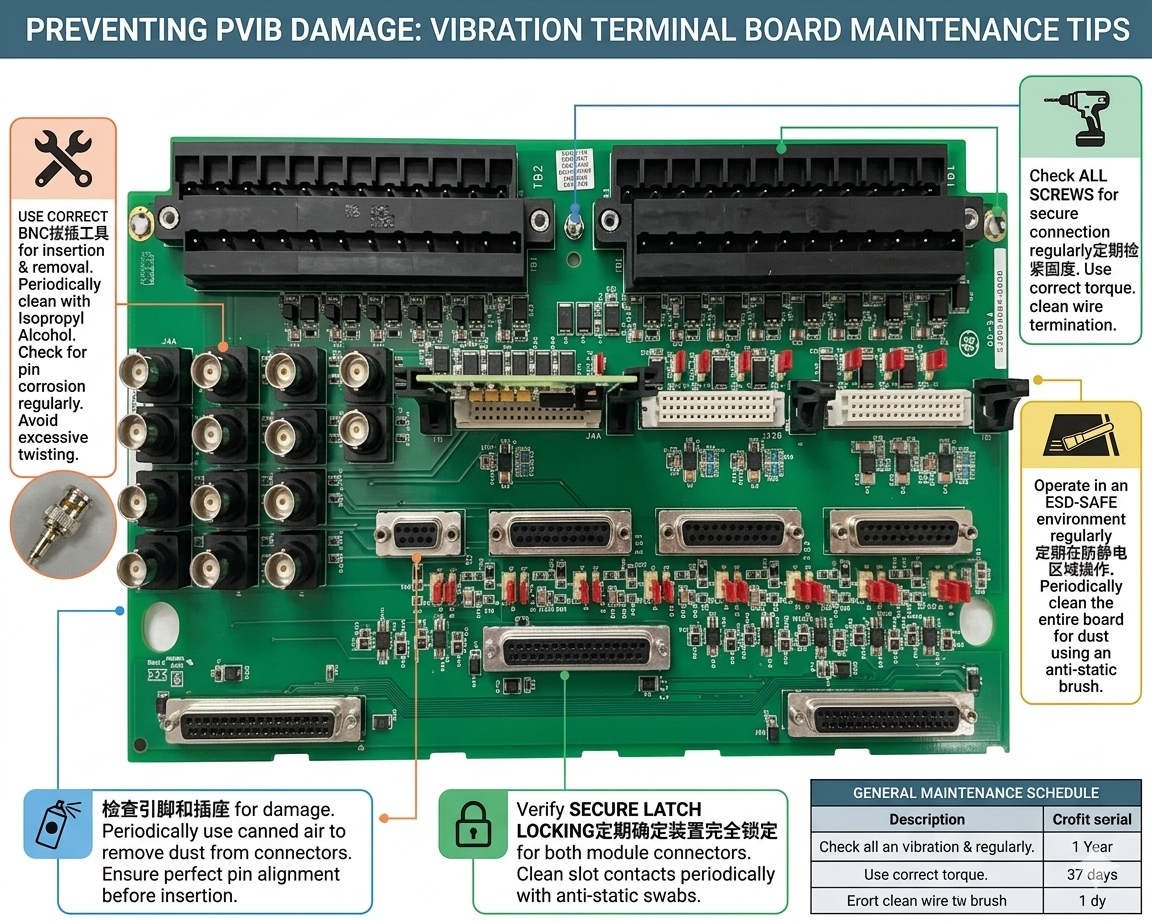
In GE Mark VI and Mark VIe industrial automation architectures, the IS230TVBAH2A and IS200TVBAH2ACC terminal boards are critical for vibration monitoring. They interface proximity probes and seismic sensors directly with PVIB I/O packs. However, technicians often overlook the risks associated with “hot-plugging” shield wires during active maintenance. While the I/O system supports online replacement, signal-level wires remain highly sensitive. At Oiltech Controls Limited, we emphasize that improper handling of these shields frequently introduces damaging transient voltages into your DCS or PLC front-end circuitry.
Understanding High-Impedance Sensitivity
PVIB modules process dynamic signals in the millivolt range. These high-sensitivity inputs detect subtle shaft vibrations accurately. During live maintenance, disconnecting or reconnecting shield wires can trigger sudden electrical discharge paths. These transients may stress the analog front-end, leading to premature hardware degradation. In environments with heavy electromagnetic interference (EMI)—such as those containing variable frequency drives (VFDs)—this risk increases significantly. Therefore, protecting the signal reference integrity is vital for long-term system stability.
Grounding Topology and System Longevity
Effective grounding is the cornerstone of any reliable control system. Multi-point grounding often creates unwanted ground loops. When a technician reconnects a live shield wire, induced currents can exceed several hundred milliamps. Our field experience shows that these surges cause more than just nuisance alarms; they accelerate the aging of isolation components within the PVIB pack. To maintain optimal performance, engineers must strictly adhere to single-point grounding protocols, typically at the cabinet side.
Best Practices for Maintenance and Safety
- Verify System State: Always de-energize the specific channel before manipulating shield wires if operational constraints allow.
- Follow Correct Sequencing: Disconnect sensor signals first and shields last. Conversely, reconnect shields first to maintain reference integrity.
- Check Grounding Integrity: Regularly inspect your cabinet grounding grid. A weak ground is the primary culprit behind intermittent vibration spikes.
- Use External Protection: For cable runs exceeding 30 meters in lightning-prone areas, always install dedicated surge protection devices (SPDs).
Expert Field Insights (FAQ)
Q: Does a single hot-plugging event always result in immediate PVIB failure?
A: Not necessarily. However, repeated transient exposure weakens the internal protection circuits. Over time, this leads to erratic readings or total channel failure, even if the system seems functional initially.
Q: Why do I see unstable vibration readings after a partial system migration?
A: This often stems from a mismatch in grounding topologies between older IS200 and newer IS230 series boards. Always verify that your grounding method matches the specific hardware revision requirement in your technical manual.
Q: Can I perform live maintenance during turbine startup?
A: We strongly advise against it. During startup, shaft-induced electrical activity and cabinet noise are at their peak. Performing maintenance during stable load conditions significantly reduces the risk of transient injection.
Optimizing Your Automation Reliability
Reliable factory automation requires more than just high-quality hardware; it demands disciplined maintenance procedures. At Oiltech Controls Limited, we provide the technical expertise and genuine spare parts necessary to support your Mark VI and Mark VIe systems. If you are troubleshooting intermittent vibration faults or planning a system upgrade, our team is ready to assist you. Explore our inventory and technical resources at our website to keep your critical assets running at peak efficiency.