Handling 24VDC Miswiring on GE IS200TBCIH1BBC Terminal Boards
The Risk of Voltage Injection in Control Systems
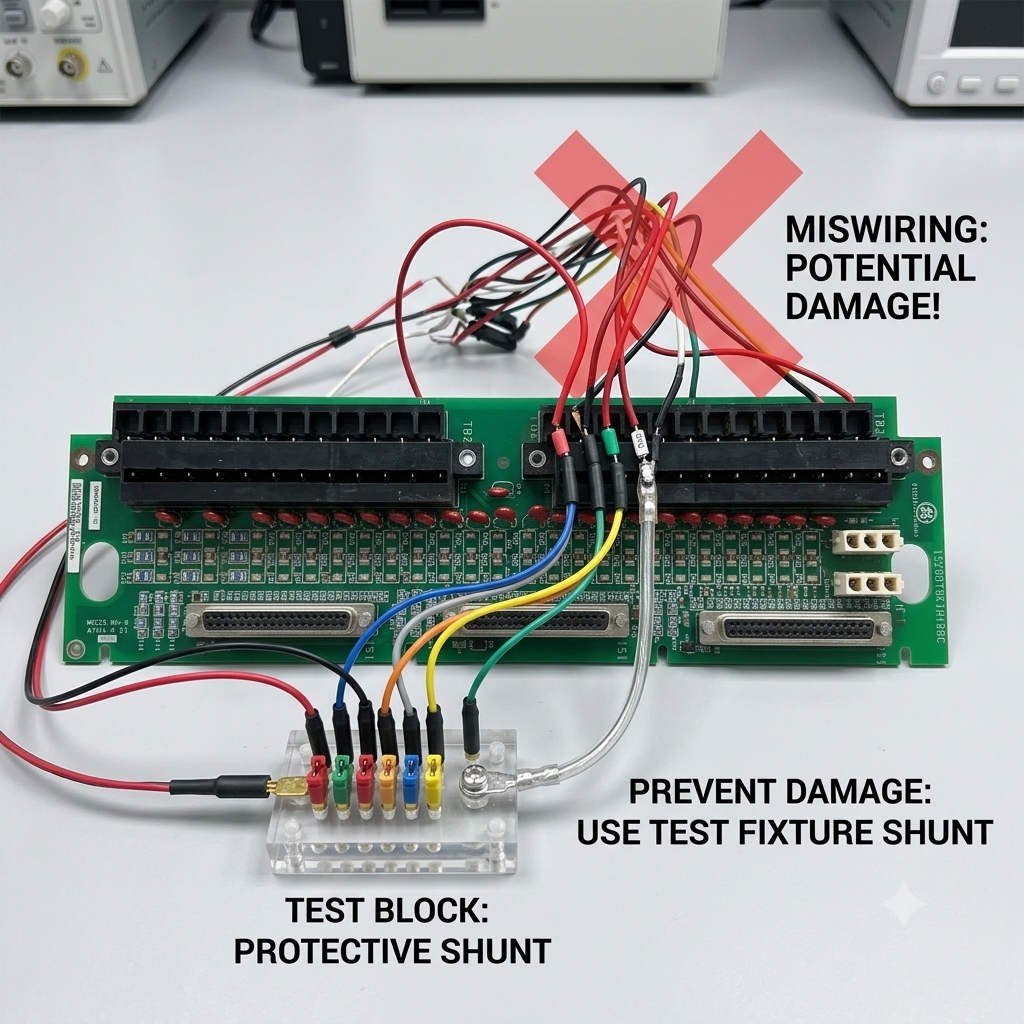
During turbine control system overhauls, wiring errors often cause significant hardware failures. A frequent concern for maintenance engineers involves the GE IS200TBCIH1BBC terminal board. Specifically, they ask: if 24VDC mistakenly touches a signal input terminal, will the I/O pack suffer immediate damage? In short, while the outcome varies based on the specific circuit design, the risk of permanent damage to the I/O pack remains high. At Oiltech Controls Limited, we emphasize that preventing these incidents is far more cost-effective than troubleshooting failed analog front-ends.
Understanding Input Design Limitations
The IS200TBCIH1BBC serves as the interface between field devices and the processing module. Many of its terminals support dry contacts or low-level analog signals. These circuits generally operate within tight voltage windows. Although they contain basic protection against transient spikes, they cannot withstand continuous 24VDC exposure. As a result, forced voltage often overwhelms internal components, leading to critical interlock failures or unit shutdowns.
Propagated Damage to I/O Processing Modules
Because the TBCI board acts as a signal pathway, injected voltage travels directly toward the I/O pack. The damage usually manifests in sensitive components like opto-isolators, multiplexers, and analog-to-digital converters (ADCs). Our field experience indicates that even if the system survives the initial contact, overstressed components often fail prematurely. Therefore, latent damage creates intermittent faults that become notoriously difficult to diagnose later.
Field-Proven Protection and Inspection Strategies
- Verify Wiring Diagrams: Always cross-reference field connections with OEM terminal diagrams before applying power.
- Use Current-Limited Supplies: Employ a portable test supply during commissioning to minimize risk if a wiring error persists.
- Conduct Post-Incident Audits: If a mistake occurs, perform a full diagnostic review rather than relying solely on HMI status flags.
- Inspect Channel Response: Utilize OEM-approved test procedures to verify the integrity of every individual analog input channel.
Strategic Troubleshooting and Maintenance FAQ
Q: If the I/O pack still communicates after a wiring error, is the hardware safe to keep in service?
A: Not necessarily. A component may remain operational while functioning outside of its calibrated accuracy range. We recommend performing a signal loop calibration to detect any subtle drifts caused by heat damage.
Q: Can I replace just the terminal board to fix an accidental 24VDC injection?
A: Usually, the terminal board is only a conduit. The damage typically resides in the I/O pack’s front-end circuitry. Replacing the terminal board without testing the I/O module often fails to resolve the underlying fault.
Q: How do I distinguish between a bad board and a bad I/O pack during commissioning?
A: Swap the suspected I/O pack with a known-good unit from a different channel. If the error follows the pack, the module is likely compromised. If the error persists on the terminal board, inspect the wiring and pin connections for physical arc damage.
Solutions for Industrial Automation Reliability
Ensuring the longevity of your GE Mark VI and Mark VIe architecture requires both precision and the right quality parts. At Oiltech Controls Limited, we provide expert technical guidance and reliable components to support your industrial automation lifecycle. If you suspect your hardware has been compromised by electrical surges or miswiring, browse our inventory for high-quality replacements or contact our engineering team for professional maintenance advice.