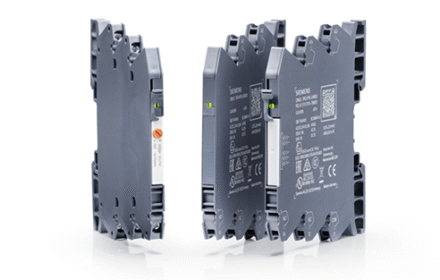
XNX-AMSV-NNCB1 Complete Description: What Makes This Model Unique
XNX-AMSV-NNCB1 is the stainless-steel-body variant of the Honeywell XNX universal transmitter, pre-configured at the factory with a catalytic bead combustible gas sensor. Every character in the part number maps to a fixed configuration:
| Segment | Value | Meaning |
|---|---|---|
| XNX | Family | Universal Transmitter |
| A | Certification | ATEX II 2G Ex d IIC T4 Gb, IECEx |
| S | Body material | Stainless steel 316 (salt-spray rated 500 h minimum) |
| M | Thread | M25 × 1.5 |
| V | Output | 4-20 mA analog + HART v7 digital |
| NN | Options | No relay module, no Modbus, no Foundation Fieldbus |
| CB1 | Sensor | Catalytic Bead Type 1 — general-purpose combustible gas |
CB1 vs. CB2 Catalytic Bead
| Parameter | CB1 (XNX-AMSV-NNCB1) | CB2 (alternative) |
|---|---|---|
| Target gases | General combustible (CH₄, C₂H₆, C₃H₈, H₂) | High-hydrogen environments |
| Detection range | 0–100 % LEL | 0–100 % LEL |
| Response time T90 | ≤ 3 seconds | ≤ 4 seconds |
| Expected life | 3–5 years | 2–3 years |
| Minimum oxygen | ≥ 8 % O₂ required | ≥ 10 % O₂ required |
Silicone caution: catalytic bead sensors poison permanently in minutes if silicone vapors reach the bead. Install the XNX-SILICONE-FILTER inlet filter if silicone sealants or gaskets are used nearby.
Stainless Steel 316 Body Benefits
- Salt-spray rating: 500 h minimum per ASTM B117 — suitable for offshore platforms, coastal terminals, marine vessels.
- Temperature range: –50 °C to +85 °C (aluminum AMAI maxes out at +75 °C).
- Impact resistance: 20 J IK10 (aluminum AMAI is IK08 / 5 J).
- Weight: stainless steel is approximately 1.8× heavier than aluminum.
CB1 Requires Oxygen to Function
Unlike IR sensors (which operate in oxygen-free atmospheres), catalytic beads need oxygen to combust the gas sample. If the XNX-AMSV-NNCB1 is installed in an inert atmosphere (nitrogen blanketing, high CO₂ concentration), the bead will read 0 % LEL even if combustible gas is present. This is not a fault — it is fundamental to catalytic bead technology. For low-O₂ environments, use the XNX-30 series IR CO₂ sensor instead.
Shipping Configuration
Included: Transmitter body (stainless 316), pre-installed CB1 sensor, 3 m POD cable, factory calibration certificate (methane, 0–100 % LEL).
Not included: 220 Ω HART terminating resistor on TB3, wall/pipe mount kit (XNX-WALL / XNX-PIPE), calibration gas kit (20–40 % LEL methane / air).
Where to Buy Spare Parts
Our inventory stocks all XNX consumables: replacement CB1 sensor (XNX-00-A00-00-CB1), silicone filter (XNX-SILICONE-FILTER), 220 Ω HART resistor bags (HART-RES-220), calibration adapter (XNX-CAL-ADAPTER).
For the full corrosion-classification decision framework with salt-spray test data, see our AMSV vs. AMAI vs. AMAV material comparison.
Related Guides
For the complete XNX fault code reference — F-00 to F-127, 1.0 / 2.0 / 3.0 / 21 mA states — jump to our master fault code hub.
Also check:
- XNX-AMAI-NNNN Order Code Breakdown — how AMAI and AMSV differ
- XNX INHIBIT 2.0 mA Power-Up Delay — CB1 warm-up timing
- حل مشكلة كود خطأ XNX Honeywell — Arabic fault code reference for Gulf maintenance teams
Frequently Asked Questions
Does XNX-AMSV-NNCB1 require oxygen? What is the O₂ minimum?
Yes. CB1 catalytic bead sensors require at least 8 % O₂ to combust the gas sample and produce a signal. If the transmitter is installed in an inert atmosphere (nitrogen blanketing, > 90 % CO₂), it will read 0 % LEL even if combustible gas is present. This is fundamental to catalytic bead technology — not a fault. For low-oxygen environments, switch to IR or electrochemical sensor types.
How long does a CB1 catalytic bead sensor last in normal service?
Honeywell rates the CB1 bead at 3–5 years of continuous service in a clean, well-ventilated refinery environment. Silicone vapor exposure drops this to less than 3 months — always install the XNX-SILICONE-FILTER. When 3.0 mA sensitivity warnings appear, recalibrate first; if span fails after recalibration, replace the bead.
Can I retrofit an aluminum XNX body to a stainless XNX body?
No. The body is the primary pressure vessel for the explosion-proof rating — swapping it would void ATEX / IECEx / NEMA 4X certifications. Spare parts for the inside of the body (sensor heads, relays, HART adapters) are available; the body itself is sealed at the factory.