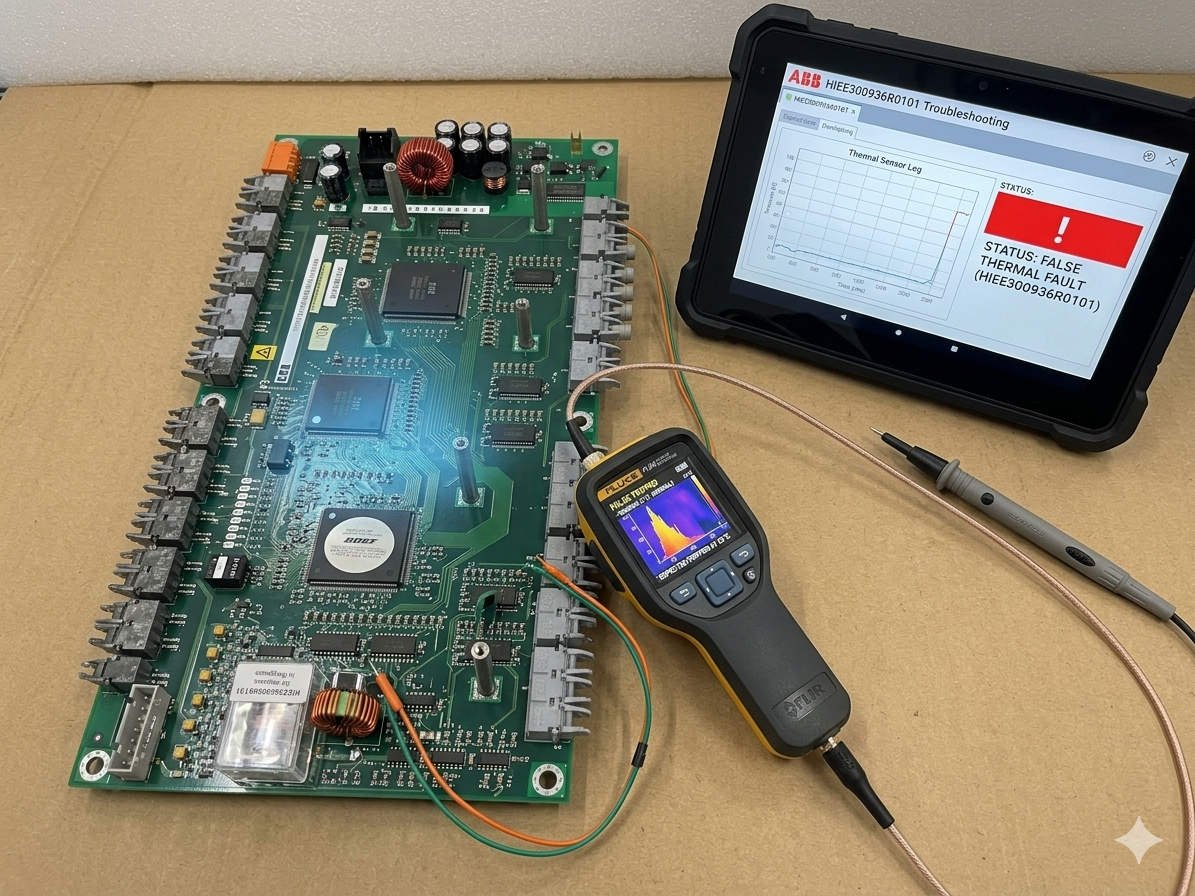
Troubleshooting False Over-Temperature Alarms on ABB UFC718AE101 HIEE300936R0101 Modules
The Critical Role of Thermal Stability in DCS Control Systems
High-availability control cabinets rely heavily on hardware stability to maintain continuous process operations. The ABB UFC718AE101 HIEE300936R0101 control board serves as a core component in many critical applications. However, recurrent over-temperature alarms often disrupt factory automation setups even when ambient conditions seem completely normal. In continuous-process plants, these false thermal warnings cause expensive nuisances. They can trigger unnecessary controller failovers or emergency shutdown interlocks without warning.

Understanding Component Wear and Onboard Sensor Drift
Legacy ABB control modules utilize analog temperature sensing circuits linked to internal analog-to-digital converters (ADCs). Over years of 24/7 service, continuous thermal cycling and conductive dust degrade these delicate circuits. Consequently, the sensing component drifts over time. Field diagnostics often reveal that the thermal element itself remains functional. Instead, reference voltage fluctuations, degraded solder joints, or drying capacitors cause the false trip points.
Differentiating Enclosure Airflow from Localized PCB Hotspots
Maintenance technicians frequently make the mistake of checking only the general cabinet environment. However, the UFC718AE101 monitors specific, localized thermal coordinates across the printed circuit board. High-heat zones naturally develop around FPGA components, communication ASICs, and DC/DC converters. In dirty refinery environments, particulate accumulation on bottom intake filters blocks critical airflow channels. Therefore, random intermittent alarms usually point to component drift, while load-correlated spikes indicate real airflow restriction.
The Hidden Impact of Backplane Power Supply Ripple
Unstable auxiliary power distribution represents another hidden cause of false thermal faults. When aging power supply modules introduce excessive AC ripple into the 5V or 3.3V rails, onboard logic becomes unstable. This voltage fluctuation directly skews the ADC reference level, causing erroneous high-temperature readings. Before sourcing expensive replacement hardware, field engineers should check voltage quality under full load. This practice prevents the unnecessary consumption of healthy spare modules.
Field Maintenance Protocols and Diagnostic Verification
Engineers must cross-examine data across multiple measurement points before condemning a module. Use infrared thermal imaging cameras to inspect the actual surface of the working PCB. A discrepancy greater than 10°C between external readings and DCS software indicates a sensor circuit failure. Furthermore, clean the Eurocard backplane connectors with non-abrasive electronic cleaners. This step removes oxidation layer resistance which can cause voltage drops and simulate over-temperature behavior.
Expert Recommendations from Oiltech Controls Limited
At Oiltech Controls Limited, we frequently consult on legacy system maintenance. Statistics show that up to 40% of older DCS thermal faults stem from peripheral issues like dirty filters or poor power quality rather than board failures. We highly recommend a proactive hardware lifecycle plan. If a module shows physical component degradation, prioritize immediate replacement to prevent sudden loop failure. For reliable component replacement options, explore the Oiltech Controls Limited catalog for authenticated parts and technical support.
Key Diagnostic and Preventive Steps
- ✓ Cross-Reference Temperatures: Check system logs against direct thermal imaging data.
- ✓ Analyze Power Health: Confirm that backplane voltage ripple falls within OEM specifications.
- ✓ Clean Backplane Interfaces: Remove oxidation on module pins using specialized contact cleaners.
- ✓ Execute Filter Maintenance: Establish a strict quarterly schedule for cabinet air filter replacements.
Industrial Automation Application Case Study
A power generation facility experienced recurring thermal trips on a turbine control node utilizing the UFC718AE101 module. While the cabinet atmosphere remained cool at 28°C, the system regularly logged critical temperature warnings. Technicians from Oiltech Controls Limited inspected the unit and discovered severe 5V rail noise coming from an aging redundant power supply. Replacing the power supply eliminated the ripple voltage, instantly curing the over-temperature symptoms without requiring a module change.
Frequently Asked Questions
Q1: Why does the thermal alarm temporarily clear after I cycle power to the card?
Power cycling resets the onboard microprocessor and recalibrates the initial ADC reference point. If the alarm returns as the module warms up to normal operating temperatures, it confirms that thermal component drift or capacitor ESR changes are causing the fault.
Q2: Do newer firmware revisions change how these temperature thresholds behave?
Yes, they often do. ABB lifecycle updates sometimes modify diagnostic tolerance windows or sensor polling frequencies. When inserting a replacement card, always verify that its firmware version aligns perfectly with your current controller configuration to avoid mismatch errors.
Q3: Can a poorly grounded cabinet cause an over-temperature trip on this specific board?
Absolutely. Ground loop currents generate common-mode electrical noise that directly interferes with sensitive analog measurement loops. Ensuring a single-point ground system according to standard industrial practices eliminates these phantom diagnostic errors.