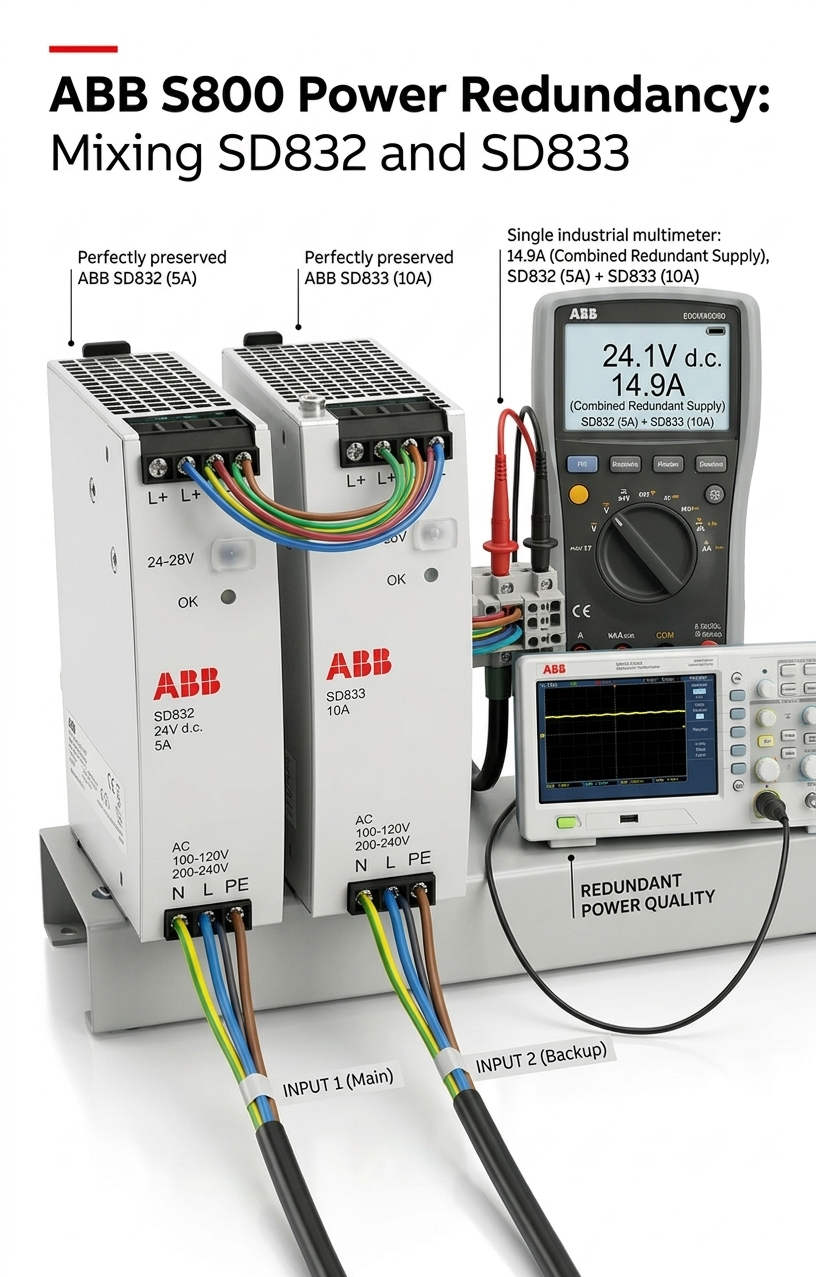
ABB S800 Power Redundancy: Mixing SD832 and SD833 via SS832
The Importance of Power System Reliability
In ABB 800xA and AC 800M control environments, stable power is the backbone of your industrial automation strategy. The SS832 voting unit allows for redundant power configurations, combining units like the SD832 (20A) and SD833 (30A) to ensure continuous operation. However, engineers frequently ask if these different modules can coexist in a redundant pair. At Oiltech Controls Limited, we often see performance imbalances when mixing these power supplies. Proper redundancy is more than just connecting wires; it requires precise load sharing to prevent premature component failure.
Can You Mix SD832 and SD833 Modules?
While the SS832 physical interface might accept both modules, we strongly advise against mixing SD832 and SD833 units. Although both provide 24VDC output, their internal power stages, current-limiting profiles, and load-sharing behaviors differ significantly. In a redundant pair, the modules must perform “Droop Sharing” to divide the load equally. When capacities are mismatched, the higher-rated SD833 will naturally carry the majority of the current, effectively nullifying the benefit of the redundant SD832. Consequently, the smaller module often sits idle, while the larger one works under constant, high-stress conditions.
Achieving Balanced Current Sharing
Load sharing in ABB power systems relies on delicate voltage-droop curves. Even a minor output voltage discrepancy can cause one power supply to dominate the load. To maintain a balanced system, follow these field-proven steps:
- ✅ Standardize Hardware: Always pair identical models (SD832 with SD832, or SD833 with SD833) to ensure matching internal characteristics.
- ⚙️ Calibrate Output Voltages: Before connecting to the SS832, measure the no-load output and adjust the potentiometers until both units match within ±20mV.
- 🔧 Verify Cabling Symmetry: Ensure that cable lengths and cross-sections are identical for both inputs to the SS832 to prevent uneven line voltage drops.
- 🔍 Conduct Full-Load Testing: Use a DC clamp meter during peak operation to verify that the load is distributed evenly across both power modules.
Oiltech Controls Limited: Engineering Perspective
At Oiltech Controls Limited, we prioritize system longevity over temporary convenience. Operating a power supply at its near-maximum capacity—often the result of poor load sharing—drastically accelerates the aging of electrolytic capacitors and internal cooling fans. For critical DCS and ESD control loops, we recommend that the total load never exceeds the capacity of a single power supply. This ensures that even if one unit fails, the remaining module can handle the full demand without entering an overcurrent trip state. Design your architecture with 1+1 redundancy in mind, rather than relying on the combined capacity of two different models.
Frequently Asked Questions (FAQ)
Q: If I have enough total capacity with mixed modules, why is it discouraged?
A: Mismatched current-sharing leads to uneven thermal stress. One unit will overheat while the other stays cool, leading to unpredictable failure rates and reduced MTBF for your control system.
Q: What is the ideal voltage tolerance for redundant ABB power supplies?
A: While factory settings vary, we suggest fine-tuning them to within ±20mV at the output terminals. This precision ensures both modules contribute equally to the load.
Q: Does the SS832 voting unit compensate for unequal voltage inputs?
A: No. The SS832 is a passive voting and redundancy unit. It does not actively regulate or balance the output of the connected power supplies; that responsibility rests entirely on the power modules themselves.
Are you looking to optimize your industrial control system’s power architecture? At Oiltech Controls Limited, we specialize in supplying high-quality ABB S800 I/O components and providing technical expertise to keep your factory floor running smoothly. From hardware procurement to complex system integration, our team is ready to support your maintenance needs. Visit our website today to explore our catalog and speak with an expert.